Stuck Closed Thermostat: Symptoms and Fix

By the CarsDailyHub Editorial Team | Automotive writers; every guide fact-checked against OEM service procedures | Updated June 2026
Quick Answer: A thermostat stuck closed blocks coolant from reaching the radiator, so the engine overheats quickly, often within minutes of starting, and the temperature gauge climbs into the red. A classic clue is that the upper radiator hose stays cool while the engine runs hot, because hot coolant is trapped in the engine. The fix is to replace the thermostat (and the gasket/O-ring), an inexpensive part, but do not keep driving an overheating engine, as it can warp the head or blow the head gasket.
This guide explains the symptoms, diagnosis, and fix for a thermostat stuck in the closed position. Last reviewed: June 2026.
Table of Contents
- What a Stuck-Closed Thermostat Does
- Symptoms
- How to Confirm It
- Why Thermostats Stick Closed
- How to Fix It
- Stuck Closed vs Stuck Open
- Frequently Asked Questions
- Sources & References
What a Stuck-Closed Thermostat Does
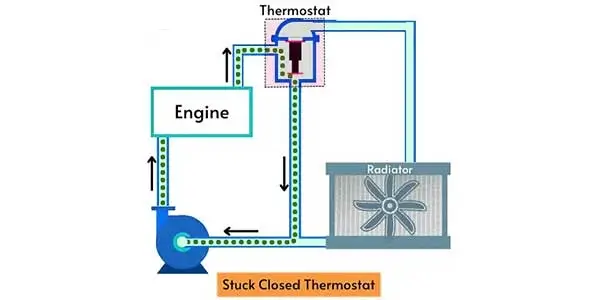
The thermostat is a temperature-controlled valve between the engine and the radiator. When the engine is cold, it stays closed so the engine warms up quickly. Once the coolant reaches operating temperature, it opens to let coolant flow to the radiator to be cooled.
When a thermostat sticks closed, that valve never opens. Hot coolant stays trapped in the engine and cannot shed heat through the radiator, so the temperature climbs rapidly. This is one of the fastest ways for an engine to overheat, and because it happens quickly, it gives you little warning.
Symptoms
| Symptom | Why it happens |
|---|---|
| Rapid overheating | Coolant cannot reach the radiator to cool down |
| Temperature gauge in the red, often soon after starting | Trapped heat builds fast |
| Upper radiator hose stays cool | No hot coolant is flowing to the radiator |
| Coolant boiling / overflow | Trapped coolant overheats and expands |
| Steam from under the hood | Overheating and possible boil-over |
| Heater may still blow warm | Heater core still gets some hot coolant |
The combination of a hot engine with a cool upper radiator hose is the most telling sign of a thermostat stuck closed.
How to Confirm It
Confirm carefully, working only with appropriate caution around a hot engine:
- Start from cold and watch the gauge. A stuck-closed thermostat overheats fast.
- Feel the upper radiator hose (carefully) as the engine warms. Normally it gets hot once the thermostat opens; if the engine is overheating but the hose stays cool, the thermostat is not opening.
- Check for flow at the radiator (with the cap off only when cool) once warm, no flow points to a closed thermostat.
- Bench test the old thermostat if removed: drop it in hot water and watch whether it opens; one that stays shut is confirmed bad.
- Rule out other overheating causes like low coolant, a failing water pump, or a plugged radiator if the thermostat tests fine.
Never open a hot cooling system, wait until it is cool to avoid serious burns.
Why Thermostats Stick Closed
- Age and wear: The wax element that drives the valve eventually fails.
- Corrosion and debris: Old, neglected coolant leaves deposits that jam the valve.
- Contaminated coolant: Mixing incompatible coolants or skipping flushes causes sludge.
- A faulty unit: Occasionally a new thermostat is defective or installed backward.
Most failures trace back to old coolant and ordinary wear, which is why a thermostat is often replaced as part of cooling-system maintenance.
How to Fix It
The fix is to replace the thermostat. It is an inexpensive part, and the job is moderate:
- Let the engine cool completely.
- Drain enough coolant to get below the thermostat housing.
- Remove the housing, noting the thermostat’s orientation (the spring side usually faces the engine).
- Clean the mating surfaces and install the new thermostat with a new gasket or O-ring.
- Reinstall the housing, torqued to spec.
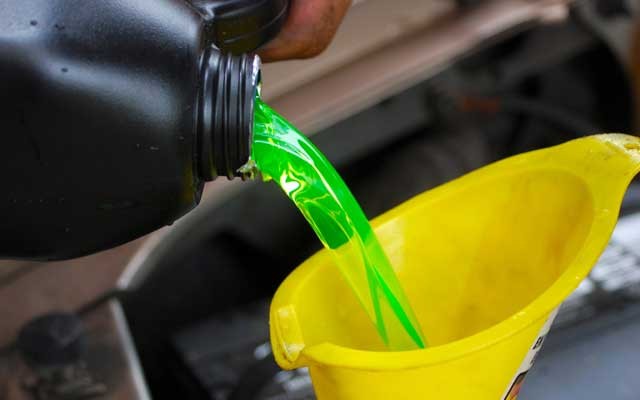
- Refill with the correct coolant and bleed the air from the system per your vehicle’s procedure, trapped air can cause overheating even with a good thermostat.
- Run the engine and confirm it reaches normal temperature and the upper hose warms up as the thermostat opens.
Use the correct temperature-rated thermostat for your vehicle, and always replace old coolant rather than reusing dirty fluid.
Stuck Closed vs Stuck Open
The two failure modes are opposites:
- Stuck closed: the engine overheats because coolant cannot reach the radiator. This is the dangerous one, it can damage the engine quickly.
- Stuck open: the engine runs cool and takes a long time to warm up, the heater is weak, and fuel economy suffers, but it usually does not cause immediate damage.
A stuck-closed thermostat is the urgent one; do not keep driving with it.
Frequently Asked Questions
Q: What are the symptoms of a thermostat stuck closed?
A: The main symptom is rapid engine overheating, often within minutes of starting, with the temperature gauge climbing into the red. A classic clue is that the upper radiator hose stays cool while the engine runs hot, because the closed thermostat traps coolant in the engine. You may also see coolant boil over or steam from under the hood.
Q: Can I drive with a thermostat stuck closed?
A: No, you should not. A stuck-closed thermostat causes fast overheating, and continuing to drive can warp the cylinder head, blow the head gasket, or even seize the engine, turning a cheap thermostat into a major repair. If your engine is overheating, pull over, shut it off, let it cool, and have it fixed before driving again.
Q: How do I know if it’s the thermostat or the water pump?
A: A stuck-closed thermostat typically shows a cool upper radiator hose while the engine overheats, because no coolant is flowing to the radiator. A failing water pump often makes noise, leaks from its weep hole, or shows pulley play, and may let the hose get hot but still overheat. Bench-testing the removed thermostat in hot water confirms whether it opens.
Q: Why does my heater still work if the thermostat is stuck closed?
A: The heater core gets hot coolant from the engine separately from the radiator circuit, so it can still blow warm air even when the thermostat to the radiator is stuck closed. That is actually a useful clue, warm heat plus an overheating engine and a cool radiator hose points specifically toward a thermostat stuck closed rather than low coolant everywhere.
Q: How much does it cost to replace a thermostat?
A: The thermostat itself is inexpensive, often just $10 to $40. With labor, a shop replacement typically runs around $150 to $350 depending on how accessible the housing is on your engine. It is a cost-effective repair, and replacing the coolant at the same time is good practice since old coolant is a common cause of sticking.
Sources & References
- Manufacturer service procedures for thermostat replacement and cooling-system bleeding
- Industry guidance on cooling-system maintenance and coolant compatibility
- RepairPal thermostat replacement cost references
- Overheating diagnosis best practices
Related articles on CarsDailyHub:
– Car Problem Solver: Complete Symptom Guide
– Does a Bad Water Pump Make Noise?
– 6.7 Powerstroke Blown Head Gasket Symptoms
– Complete Guide to All Car Dashboard Warning Lights