
Toyota Prius Dashboard Warning Lights: What Each Symbol Means

By the CarsDailyHub Editorial Team | Automotive writers; every article fact-checked against Toyota’s owner’s manual and OEM service documentation | Updated June 2026
Quick Answer: The three lights that mean stop driving immediately on a Toyota Prius are the red engine coolant temperature light, the red oil pressure light, and the red brake light. Amber lights (check engine, ABS, TPMS, hybrid system) mean drive carefully and get it diagnosed soon. Green and blue lights are informational, like cruise control and turn signals, and need no action.
This guide covers dashboard warning symbols for the 2010-2024 Toyota Prius (third and fourth generations). Specifications reference Toyota’s owner’s manual and OEM service documentation. Last reviewed: June 2026.
Table of Contents
- How Toyota Prius Dashboard Lights Work (Color Logic)
- Complete Toyota Prius Warning Light Table
- Red Warning Lights, Stop Driving Immediately
- Amber/Yellow Warning Lights, Diagnose Soon
- Green & Blue Indicator Lights (Informational)
- Toyota Prius-Specific Lights You Should Know
- What to Do When a Light Comes On (Decision Flow)
- How Much It Costs to Diagnose Dashboard Lights
- Frequently Asked Questions
- Sources & References
How Toyota Prius Dashboard Lights Work (Color Logic)
Toyota uses a three-tier color system across the Prius lineup. Once you understand the logic, you can read any light without memorizing each symbol:
- Red = danger. Something is actively failing or about to cause damage. Pull over safely and stop the engine.
- Amber/Yellow = caution. A system needs attention but the vehicle is still drivable. Schedule diagnosis within a few days, do not ignore it for weeks.
- Green/Blue = informational. A feature is switched on (cruise, headlights, turn signals). No action needed.
One nuance specific to the Prius: a flashing amber light is more urgent than a steady one. A flashing check engine light means an active engine misfire that can damage the catalytic converter in minutes. That is a pull-over-now situation even though the color is amber.
The Prius also has unique hybrid-system warnings that other Toyotas do not have. The hybrid system warning light (a car icon with an exclamation mark) is specific to Toyota hybrid models and indicates a fault in the hybrid powertrain, inverter, or high-voltage battery system. This light requires immediate attention because hybrid system failures can disable the vehicle entirely.
Mechanics typically see Prius owners ignore the amber hybrid system warning for weeks because “the car still drives fine on gas.” By the time it goes red or the vehicle enters limp mode, the underlying inverter or battery issue has often turned a $500 repair into a $4,000 one. Amber means soon, not never.
Complete Toyota Prius Warning Light Table
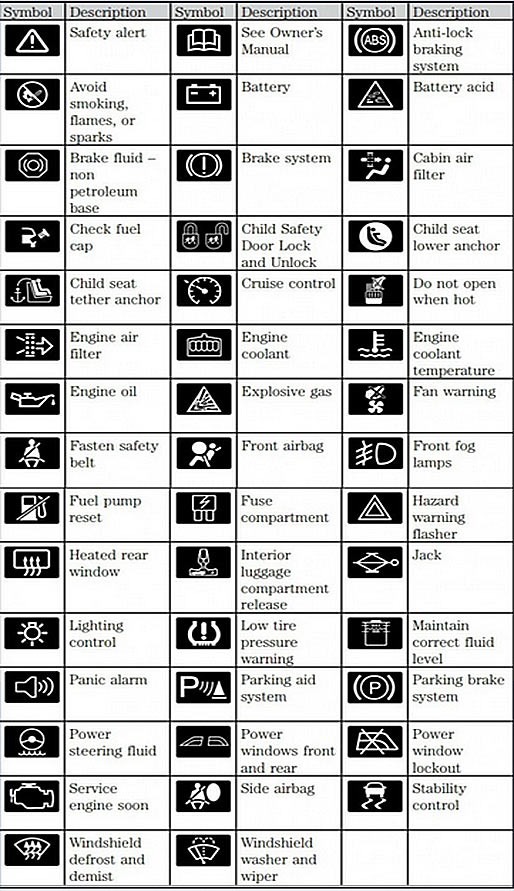
| Symbol | Name | Color | Severity | What It Means | Action |
|---|---|---|---|---|---|
| Engine thermometer | Engine Coolant Temp | Red | 🔴 Stop now | Engine is overheating | Pull over, stop engine, let cool 20+ min |
| Oil can | Engine Oil Pressure | Red | 🔴 Stop now | Low oil pressure, engine damage imminent | Stop, check oil level, do not restart if low |
| (!) in circle | Brake System | Red | 🔴 Stop now | Parking brake on, low brake fluid, or brake fault | Release parking brake; if still on, check fluid, tow if needed |
| Battery | Charging System | Red | 🔴 Stop now | Alternator or inverter failure, 12V battery draining | Turn off all electrics, drive to nearest shop |
| Car with ! | Hybrid System Warning | Red/Amber | 🔴/🟡 | Fault in hybrid powertrain, inverter, or HV battery | Red: stop. Amber: diagnose immediately |
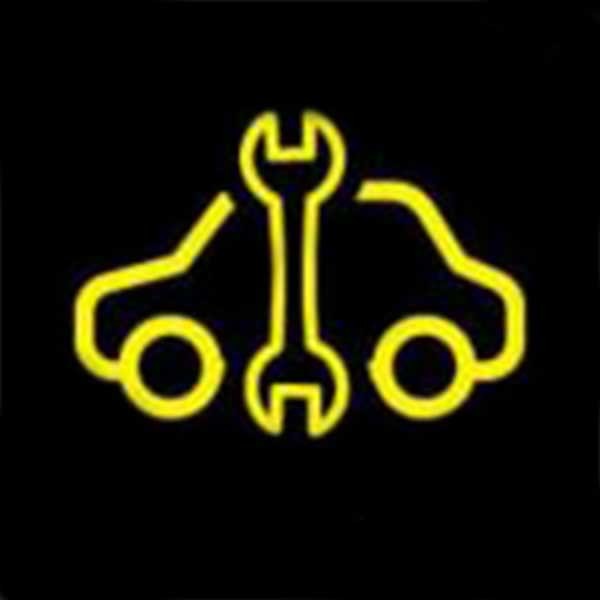
| Engine icon | Check Engine (MIL) | Amber | 🟡 Diagnose soon | Emissions or powertrain fault | Tighten fuel cap first; if persists, scan codes |
| Engine icon (flashing) | Check Engine, Misfire | Amber flashing | 🔴 Stop now | Active misfire, catalytic converter at risk | Reduce speed, low load, get to shop now |
| ABS in circle | Anti-Lock Brakes | Amber | 🟡 Diagnose soon | ABS disabled, base brakes still work | Safe to drive carefully; schedule diagnosis |
| Tire with ! | Tire Pressure (TPMS) | Amber | 🟡 Check soon | One or more tires low on air | Check all tire pressures at next stop |
| Airbag icon | Airbag/Supplemental Restraint | Amber | 🟡 Diagnose soon | Airbag system fault, may not deploy in crash | Do not ignore; schedule dealer diagnosis |
| Fuel pump | Low Fuel | Amber | 🟡 Refuel soon | Less than ~50 miles of range | Refuel within 50 miles |
| Door ajar | Door Open | Red | 🔴 Stop & check | A door is not fully latched | Stop, close all doors |
| Seatbelt | Seatbelt Reminder | Red | 🔴 Buckle up | Driver or passenger unbuckled | Fasten seatbelt |
| Speedometer | Cruise Control | Green | ℹ️ Info | Cruise is active | Normal, no action |
| Headlight icon | High Beams | Blue | ℹ️ Info | High beams on | Dim for oncoming traffic |
| Arrow | Turn Signal | Green | ℹ️ Info | Signal active | Normal |
| EV mode icon | EV Mode | Green | ℹ️ Info | Running on battery power only | Normal on hybrid models |
| Eco icon | Eco Mode | Green | ℹ️ Info | Eco driving mode active | Normal |
| Power icon | Power Mode | Green | ℹ️ Info | Power driving mode active | Normal |
| Steering wheel | Power Steering (EPS) | Red/Amber | 🔴/🟡 | EPS system fault | Red: tow. Amber: drive carefully to shop |
| Key icon | Key System Warning | Amber | 🟡 Diagnose soon | Key not detected or immobilizer fault | Check key battery; try spare key |
| (!) triangle | Master Warning | Red | 🔴 Stop now | Multiple system faults detected | Stop, check other lights, diagnose |
Red Warning Lights, Stop Driving Immediately
Engine Coolant Temperature
When this red thermometer illuminates, your engine is above its safe operating temperature, typically above 118°C (244°F). Continuing to drive even a few miles can warp the cylinder head and blow the head gasket.
What to do:
1. Pull over to a safe location and shut the engine off.
2. Do not open the radiator cap while hot. Pressurized coolant can cause severe burns. Wait at least 20-30 minutes.
3. Once cool, check the coolant reservoir level. If low, top up with the correct Toyota-specified coolant (Toyota Super Long Life Coolant or equivalent).
4. Look underneath for leaks. A puddle of pink, orange, or green fluid means a coolant leak.
5. If the light returns after topping up, do not drive. Call a tow. The water pump or thermostat may have failed.
On the Prius, the cooling system serves both the gasoline engine and the power electronics (inverter). An overheating issue may be related to the inverter coolant loop, not just the engine. If the inverter overheats, the hybrid system shuts down to protect itself.
Engine Oil Pressure
The red oil can means oil pressure has dropped below the safe threshold. This is not a “low oil level” reminder. It means your engine is about to destroy itself.
What to do:
1. Pull over and stop the engine immediately.
2. Wait 5 minutes for oil to drain into the pan, then check the dipstick.
3. If oil is below the MIN mark, add the correct viscosity. Most Prius models use 0W-16 or 0W-20 full synthetic. Check the oil filler cap or manual for your specific year.
4. If the dipstick reads normal but the light stays on, do not restart. Low pressure with a full sump means a failing oil pump or blocked pickup. Driving will spin a bearing in minutes.
5. Tow to a shop.
Brake System
The red (!) circle on the Prius means one of three things: the parking brake is engaged, brake fluid is low, or there is a brake-system fault.
What to do:
1. Confirm the parking brake is fully released. On Prius models with electronic parking brake, press the switch down firmly.
2. If the light stays on, check the brake fluid reservoir under the hood.
3. If fluid is at the MIN line or below, top up with DOT 4 brake fluid (verify spec in your manual).
4. A sudden large fluid drop means a leak in the system. The brake pedal may feel soft. Do not drive. Tow it.
5. If fluid is normal and the pedal feels firm, the brake switch or sensor may be faulty. Drive carefully to a shop.
The Prius uses regenerative braking, which reduces wear on the friction brakes. However, the hydraulic brake system is still critical for emergency stops and low-speed braking. Do not ignore brake warnings.
Hybrid System Warning (Red)
The red car-with-exclamation icon is specific to Toyota hybrid models. It indicates a serious fault in the hybrid powertrain, inverter, or high-voltage battery system.
What to do:
1. Pull over safely and stop the vehicle.
2. Do not attempt to restart the hybrid system.
3. Call for a tow to a Toyota dealer or a shop that specializes in hybrid repair.
4. Do not touch any orange high-voltage cables under the hood.
Common causes include inverter failure (a known issue on some 2010-2014 Prius models, with extended warranty coverage in some markets), high-voltage battery degradation, or a fault in the hybrid control module.
Charging System / 12V Battery
The red battery icon means the 12V charging system has failed. The Prius does not have a traditional alternator. Instead, the 12V battery is charged by a DC-DC converter that draws power from the high-voltage hybrid battery.
What to do:
1. Turn off everything non-essential: climate control, heated seats, radio, phone chargers.
2. Drive directly to the nearest repair shop. Do not make stops.
3. If the 12V battery dies completely, the Prius cannot start even though the hybrid battery may have plenty of charge. The 12V battery powers the computers that start the hybrid system.
The Prius 12V battery is small (a compact AGM battery, not a standard car battery) and is located in the rear of the vehicle. It typically lasts 5-7 years. If your Prius is hard to start or the 12V warning appears intermittently, the 12V battery may need replacement ($150-250).
Amber/Yellow Warning Lights, Diagnose Soon
Hybrid System Warning (Amber)
The amber hybrid system warning means a non-critical fault has been detected in the hybrid system. The vehicle is still drivable, but the issue needs prompt diagnosis.
Common causes include:
– High-voltage battery cell imbalance (common on 2010-2015 models with high mileage)
– Inverter coolant pump failure (the inverter has its own separate coolant loop)
– Hybrid control module software issue (sometimes resolved with a dealer firmware update)
Do not ignore this light. Hybrid system issues progress. What starts as an amber warning can become a red warning that disables the vehicle. Schedule diagnosis within a few days.
Check Engine Light (MIL)
The amber engine icon is the most common and most misunderstood light. It can mean something as trivial as a loose fuel cap or as serious as a failing catalytic converter.
First step, always: Tighten the fuel cap until it clicks at least once. A loose cap is the single most common cause of a Prius check engine light, and it takes 10 seconds to rule out. Drive for a day. If the light clears, you are done.
If it stays on, you need the diagnostic trouble codes (DTCs) read. Any auto parts store will read them for free, or a $25-40 OBD2 scanner pays for itself on the second use. The code tells you the system at fault. Never replace parts guessing.
A flashing amber check engine light is different and urgent. It means an active engine misfire. Unburned fuel is entering the exhaust and can overheat the catalytic converter, melting its internal honeycomb. Reduce speed immediately, minimize load, and get to a shop the same day.
ABS Warning Light
When the amber ABS light illuminates on the Prius, the anti-lock braking system is disabled. Your base brakes still work. You can stop normally. What you lose is the anti-lock function in a panic stop, so wheels may lock up under hard braking.
Most ABS faults on the Prius trace to wheel-speed sensors or their wiring, both of which sit exposed near the wheels and corrode over time. Diagnosis is straightforward with a scanner. Safe to drive carefully to a shop.
Tire Pressure (TPMS)
The horseshoe-with-exclamation icon means one or more tires has dropped below the pressure threshold, typically 25-30% below the placard pressure on the driver’s door jamb. For the Prius, this is usually around 32-35 psi cold depending on trim and tire size.
Check all four tires with a gauge at the next safe stop. The TPMS does not tell you which tire, and a slow leak can become a flat. If pressures look fine but the light persists, the system may need a TPMS reset. On most Prius models, this is done via the dashboard menu or by driving above 20 mph for a few minutes after inflating.
Key System Warning
The amber key icon means the Prius’s immobilizer system cannot detect the key, or the key battery is low. You may still be able to start the engine by holding the key fob against the start button, but this is a temporary workaround.
What to do:
1. Replace the key fob battery (CR2032, available at any pharmacy or hardware store for $3-5).
2. If the light persists with a new battery, try your spare key.
3. If both keys trigger the warning, the vehicle’s immobilizer antenna may be faulty. This requires dealer diagnosis.
Green & Blue Indicator Lights (Informational)
These lights confirm a feature is active. They are not warnings:
- Green cruise control icon – cruise is engaged and holding speed.
- Blue headlight icon – high beams are on. Switch to low for oncoming traffic.
- Green flashing arrows – turn signal active.
- Green EV mode icon – the Prius is running on battery power only, with the gasoline engine off. This happens at low speeds and during deceleration.
- Green Eco icon – Eco driving mode is active. Throttle response is softened for better fuel economy.
- Green Power icon – Power driving mode is active. Throttle response is sharpened for more responsive acceleration.
- Green car between lane lines – Lane Departure Warning is active and monitoring lane position. If it flashes amber, the system detects an unintended lane departure.
If any of these stay illuminated when the feature is off, a switch or sensor may be stuck. Worth mentioning at your next service, but not urgent.

Toyota Prius-Specific Lights You Should Know
A few symbols are either unique to the Prius or behave differently than on non-hybrid Toyotas:
Hybrid System Warning (car with !) – This is the most important Prius-specific light. It indicates a fault in the hybrid powertrain. Amber means diagnose soon. Red means stop immediately and tow. Do not confuse this with the check engine light, which covers the gasoline engine only. The hybrid system warning covers the inverter, high-voltage battery, electric motors, and hybrid control module.
EV Mode Indicator – The green EV icon means the Prius is operating in electric-only mode. This is normal at low speeds (under 25 mph), during deceleration, and when the battery has sufficient charge. If the EV mode disengages unexpectedly, the battery may be low or the engine may need to run for emissions control (the Prius runs the engine periodically to keep it warm and to burn fuel before it goes stale).
Ready Indicator – The “READY” light on the dashboard means the hybrid system is active and the vehicle can be driven. This is different from a traditional car where the engine running means the car is ready. On the Prius, the engine may not be running even when READY is on. If READY does not illuminate when you press the start button, the hybrid system has a fault.
Inverter Coolant Warning – The Prius has two separate cooling systems: one for the engine and one for the inverter/power electronics. If the inverter coolant warning appears, the inverter is overheating. This is often caused by a failed inverter coolant pump (a known issue on 2010-2014 models). The fix is a $200-400 pump replacement, but ignoring it can lead to inverter failure at $2,000-4,000.
Regenerative Braking Indicator – On the energy monitor display, you will see arrows showing energy flowing from the wheels to the battery during deceleration. This is normal and indicates the regenerative braking system is recovering energy. It is not a warning.
What to Do When a Light Comes On (Decision Flow)
Use this sequence every time a new light appears:
- Is it red? Pull over safely within the next minute. Stop the engine. Check fluid levels once cool. Do not drive if a red light returns after topping up.
- Is it amber and flashing? Reduce speed and load immediately. Drive to the nearest shop, not home, not work, the shop. A flashing amber is treated like a red.
- Is it amber and steady? Note the symbol. Tighten the fuel cap if it is the check engine light. Schedule diagnosis within the week. The vehicle is drivable but the issue will not self-resolve.
- Is it green or blue? No action. It is informational. Confirm the feature is one you intended to switch on.
- Is it the hybrid system warning? Treat amber hybrid warnings more seriously than other amber lights. The hybrid system can disable the vehicle without much warning. Schedule diagnosis within days, not weeks.
The one mistake mechanics see most often: ignoring the amber hybrid system warning because “the car still drives fine.” The Prius hybrid system is complex and expensive. A $200 inverter coolant pump, if ignored, can lead to a $4,000 inverter replacement. The amber light is your cheap early warning. Use it.
How Much It Costs to Diagnose Dashboard Lights
| Service | DIY Cost | Shop Cost (US avg) | Time |
|---|---|---|---|
| OBD2 code scan | $25-40 (scanner) | Free at auto parts stores; $80-150 at shop | 5-15 min |
| Fuel cap replacement | $12-25 | $25-60 parts + labor | 2 min |
| 12V battery replacement | $150-200 (part) | $200-350 parts + labor | 30 min |
| Inverter coolant pump | $80-150 (part) | $200-400 parts + labor | 1-2 hrs |
| Wheel speed sensor replacement | $25-60 (part) | $120-220 parts + labor | 30-45 min |
| Coolant leak diagnosis | – | $80-150 diag | 30-60 min |
| Oil pressure diagnosis | – | $80-150 diag | 30-90 min |
| Brake fluid top-up | $6 (fluid) | $20-40 | 5 min |
| Hybrid system diagnosis | – | $150-300 diag | 1-2 hrs |
| Key fob battery | $3-5 (battery) | $15-30 | 2 min |
Cost ranges are US averages compiled from RepairPal and owner-reported data. Actual costs vary by region, model year, and shop type.
When to call a mechanic instead of DIY:
– Any red light that returns after you have topped up the relevant fluid
– A flashing check engine light (active misfire)
– Any brake-system fault you cannot trace to the parking brake
– Anything involving the airbag or supplemental restraint system, never DIY airbag work
– Any hybrid system warning (red or amber), as these involve high-voltage components
Frequently Asked Questions
Q: Why did my Toyota Prius check engine light come on after getting gas?
A: The most common cause is a loose or faulty fuel cap. The evaporative emissions system monitors for vapor leaks, and a cap that is not clicked tight triggers a P0455 or P0441 code. Tighten the cap until it clicks, drive for a day, and the light usually clears. If it does not, have the codes read. The purge valve or charcoal canister may be the actual culprit.
Q: What does the hybrid system warning light mean on a Prius?
A: The hybrid system warning light (a car icon with an exclamation mark) indicates a fault in the hybrid powertrain, which includes the inverter, high-voltage battery, electric motors, and hybrid control module. Amber means diagnose soon. Red means stop immediately and tow. Do not confuse this with the check engine light, which covers the gasoline engine only. Hybrid system issues can disable the vehicle entirely if ignored.
Q: Can I keep driving with the amber hybrid system warning on?
A: You can, but with caution and only for a short distance. The vehicle is drivable, but the underlying issue will not fix itself. Schedule diagnosis within a few days, not weeks. If the light turns red or the vehicle enters limp mode, stop driving immediately and call for a tow. Hybrid system repairs are expensive, and early diagnosis can save thousands.
Q: The ABS light is on but my brakes feel fine, is that safe?
A: Your base brakes still work normally, so stopping distance is unaffected in normal driving. What you lose is anti-lock protection in a panic stop. Wheels may lock and the vehicle can skid. It is safe to drive carefully to a shop, but get it diagnosed. The most common cause on the Prius is a corroded wheel-speed sensor, a $120-220 repair.
Q: What does the red oil light mean versus the amber maintenance reminder?
A: They are completely different. The red oil can means low oil pressure. Stop the engine immediately or risk catastrophic damage. The amber maintenance reminder or oil-life indicator is a scheduled-service reminder based on mileage and time. It means an oil change is due, not that pressure is low. Never confuse the two. The red one is an emergency, the amber one is a calendar reminder.
Q: My Prius will not start and the READY light does not come on, what should I do?
A: The most common cause is a dead 12V auxiliary battery. The Prius 12V battery is small and located in the rear of the vehicle. It powers the computers that start the hybrid system. If it is dead, the hybrid battery cannot engage even if it has plenty of charge. Try jump-starting the 12V battery using the jump terminals under the hood. If the 12V battery is more than 5 years old, it likely needs replacement ($150-250).
Q: Does the Toyota Prius have known dashboard warning light issues?
A: The 2010-2014 Prius has a known issue with the inverter coolant pump, which can trigger the hybrid system warning. Toyota issued a technical service bulletin and, in some cases, extended warranty coverage. The 12V auxiliary battery is also a known weak point, typically failing after 5-7 years. If you see intermittent electrical warnings or the READY light is slow to illuminate, test the 12V battery first.
Sources & References
- Toyota Motor Corporation – 2010-2024 Toyota Prius Owner’s Manuals (model-year specific; available at toyota.com/owners)
- Toyota Technical Service Bulletins covering inverter coolant pump and 12V battery (VIN-specific; available through Toyota dealers)
- NHTSA – Vehicle complaint database for Toyota Prius by model year (nhtsa.gov)
- RepairPal – Average repair cost estimates for Toyota Prius by repair type
- OBD-II code definitions – P0455, P0441, C1201 per SAE J2012 standard
Related articles on CarsDailyHub:
– Complete Guide to All Car Dashboard Warning Lights
– Ford Escape Dashboard Warning Lights: What Each Symbol Means
– Nissan Qashqai Dashboard Warning Lights: What Each Symbol Means
– Toyota Dashboard Symbols and Their Meanings
– Trac Off & Check Engine Light on Toyota Tacoma: Causes, Codes & Fix