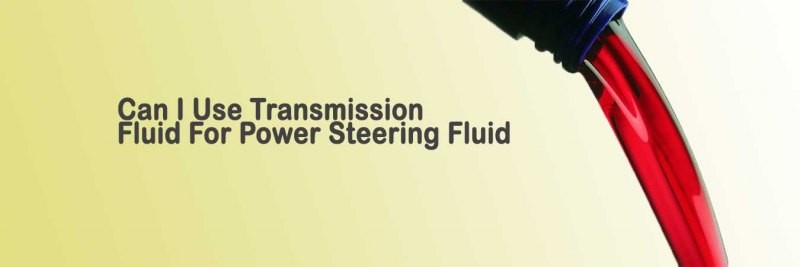
Can I Use Transmission Fluid for Power Steering Fluid?

By the CarsDailyHub Editorial Team | Automotive writers; every article fact-checked against OEM fluid specifications | Updated June 2026
Quick Answer: In many older vehicles (pre-2000), yes, you can use ATF (automatic transmission fluid) in the power steering system. GM, Ford, and Chrysler often specified Dexron or Meron ATF as the factory power steering fluid. In newer vehicles (2000+), no. Modern power steering systems use specialized fluid with different additives, and using ATF can damage seals, cause leaks, and void your warranty. Check your owner’s manual or the power steering reservoir cap for the exact specification. If in doubt, use the fluid specified by the manufacturer.
This guide covers fluid compatibility for power steering systems across vehicle makes. Last reviewed: June 2026.
Table of Contents
- The Short Answer
- Which Vehicles Allow ATF in Power Steering?
- Which Vehicles Do NOT Allow ATF?
- What Happens If You Use the Wrong Fluid?
- How to Check What Fluid Your Vehicle Needs
- Emergency Substitution Guide
- How to Flush Power Steering Fluid
- Cost Breakdown
- Frequently Asked Questions
- Sources & References
The Short Answer
The question “can I use transmission fluid for power steering?” has a split answer:
Yes, if your vehicle was made before approximately 2000 and the manufacturer specified ATF as the power steering fluid. Many GM, Ford, and Chrysler vehicles from the 1980s and 1990s used Dexron III or Mercon ATF in the power steering pump from the factory. The power steering pump and seals were designed to work with ATF.
No, if your vehicle was made after approximately 2000 or is a Japanese, Korean, or European brand. Modern power steering fluids have different friction modifiers, seal conditioners, and viscosity characteristics than ATF. Using ATF in a system designed for PSF can cause seal damage, pump noise, and premature failure.
The golden rule: Check the power steering reservoir cap or your owner’s manual. If it says “use ATF Dexron” or “use Mercon,” you can use ATF. If it says “use power steering fluid only” or specifies a part number, use that exact fluid.
Which Vehicles Allow ATF in Power Steering?
| Make | Models (Approximate) | Specified Fluid |
|---|---|---|
| GM (Chevy, GMC, Buick, Cadillac) | Most pre-2000 models | Dexron III ATF |
| Ford | Most pre-2000 models | Mercon ATF |
| Chrysler (Dodge, Plymouth) | Most pre-2000 models | Dexron III ATF or ATF+4 |
| Some older Honda/Acura | 1990s Accord, Civic | Honda PSF (not ATF, but some owners used ATF without immediate issues) |
| Some older Toyota | 1990s Camry, Corolla | Dexron II/III ATF |
Important: Even on vehicles that allow ATF, use the correct ATF type. Dexron III is not the same as ATF+4. Using the wrong ATF type can cause shudder and seal damage.
Which Vehicles Do NOT Allow ATF?
| Make | Models | Required Fluid |
|---|---|---|
| Honda/Acura | 2000+ | Honda PSF (part number 08206-9002) only |
| Toyota/Lexus | 2000+ | Toyota PSF (part number 08886-01206) or Dexron III (check manual) |
| Nissan/Infiniti | 2000+ | Nissan PSF or Dexron III (check manual) |
| BMW | All | CHF 11S (Pentosin) or ATF Dexron VI (check manual) |
| Mercedes | All | MB Power Steering Fluid (part number Q1460001) |
| VW/Audi | All | CHF 11S (Pentosin) or G002000 |
| Hyundai/Kia | 2000+ | Hyundai PSF or Dexron III (check manual) |
| Subaru | All | Subaru PSF or Dexron III (check manual) |
| Ford | 2000+ | Motorcraft MERCON LV ATF or Motorcraft PSF (check manual) |
| GM | 2000+ | Dexron VI ATF (many GM vehicles still specify Dexron for PS) |
European vehicles are the most strict. BMW, Mercedes, VW, and Audi use specialized Pentosin hydraulic fluid (CHF 11S or CHF 202) that is green in color and completely incompatible with ATF. Using ATF in a European power steering system will cause rapid seal failure and pump damage.
What Happens If You Use the Wrong Fluid?
| Wrong Fluid | Consequence | Time to Failure |
|---|---|---|
| ATF in a PSF-only system | Seal swelling, leaks, pump noise | Weeks to months |
| PSF in an ATF-specified system | Usually OK (PSF is less aggressive than ATF) | Rarely causes issues |
| ATF+4 in a Dexron III system | Usually OK (ATF+4 is backward compatible) | Rarely causes issues |
| Dexron in an ATF+4 system | Shudder, poor cold-weather performance | Weeks |
| ATF in a Pentosin (European) system | Rapid seal failure, pump destruction | Days to weeks |
| Brake fluid in power steering | Total system destruction (seals dissolve) | Hours |
The most dangerous mistake: Using brake fluid in the power steering system. Brake fluid is glycol-based and will destroy the rubber seals in the power steering pump and rack within hours. If someone has added brake fluid, the entire system must be flushed immediately and all seals replaced.
How to Check What Fluid Your Vehicle Needs
-
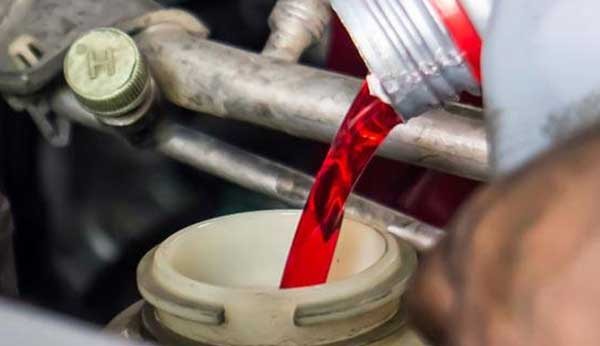
Check the power steering reservoir cap. Most caps have the fluid specification printed or stamped on them. Look for “ATF only,” “PSF,” “Dexron,” “Mercon,” “CHF 11S,” or a part number.
-
Check the owner’s manual. The fluid specification is in the maintenance or specifications section.
-
Check the fluid color.
– Red/pink: ATF (Dexron, Mercon, ATF+4)
– Clear/amber: Power steering fluid
– Green: Pentosin (CHF 11S, European vehicles) -
Call a dealer parts department. Give them your VIN and ask for the exact power steering fluid specification.
Emergency Substitution Guide
If you have a power steering leak and cannot get the correct fluid:
| Your Vehicle Needs | Emergency Substitute | Risk Level |
|---|---|---|
| Dexron III ATF | Any Dexron VI ATF (backward compatible) | Very low |
| Mercon ATF | Any Mercon LV ATF | Very low |
| ATF+4 | Dexron VI (temporary only) | Medium |
| Honda PSF | Dexron III (temporary, flush within 1 week) | Medium |
| Toyota PSF | Dexron III (temporary, flush within 1 week) | Low |
| Pentosin CHF 11S | Nothing. Do not substitute. Tow the vehicle. | Critical |
Emergency rule: If you must use a substitute, use the closest match and flush the system with the correct fluid within one week. A small amount of wrong fluid for a short time is unlikely to cause damage. A full system of wrong fluid for months will cause seal failure.
How to Flush Power Steering Fluid
If you used the wrong fluid or want to replace old fluid:
-
Jack up the front of the vehicle and support on jack stands. The front wheels need to turn freely.
-
Disconnect the return line from the power steering reservoir (the lower-pressure line, usually a hose clamp). Route it into a drain pan.
-
Fill the reservoir with the correct new fluid.
-
Have a helper start the engine and turn the steering wheel lock-to-lock slowly. Old fluid will pump out the return line.
-
Keep adding new fluid to the reservoir as the old fluid pumps out. Do not let the reservoir run dry (the pump will be damaged).
-
Continue until the fluid coming out is clean and the same color as the new fluid. Usually 1-2 quarts.
-
Turn off the engine. Reconnect the return line. Top up the reservoir.
-
Bleed the system. Start the engine and turn the steering wheel lock-to-lock 5-10 times to bleed air. Check the fluid level and top up.
Cost: $10-20 (2 quarts of fluid). Time: 30-45 minutes. Tools: Jack, jack stands, pliers, drain pan, funnel.
Cost Breakdown
| Service | DIY Cost | Shop Cost (US avg) | Time |
|---|---|---|---|
| Power steering fluid top-up | $5-10 (1 qt) | $20-40 | 5 min |
| Power steering fluid flush | $10-20 (2 qt) | $80-150 | 30-45 min |
| Power steering pump replacement | $80-200 (part) | $250-500 | 2-3 hrs |
| Power steering rack replacement | $200-500 (part) | $500-1,200 | 3-5 hrs |
| System flush after wrong fluid | $10-20 (fluid) | $80-150 | 30-45 min |
Frequently Asked Questions
Q: Can I use transmission fluid in my power steering?
A: It depends on your vehicle. If your owner’s manual or the power steering reservoir cap specifies ATF (Dexron, Mercon, ATF+4), then yes. Many older GM, Ford, and Chrysler vehicles use ATF as the factory power steering fluid. If your vehicle specifies power steering fluid (PSF) or a specialized fluid like Pentosin CHF 11S, do not use ATF. Using ATF in a PSF-only system can damage seals and cause leaks. Check your manual or reservoir cap first.
Q: What happens if I put ATF in a power steering system that requires PSF?
A: ATF has different additives than PSF, including friction modifiers and detergents that can swell or harden the rubber seals in a PSF-only system. The result is seal leaks, pump noise, and eventual pump failure. The damage is not immediate but occurs over weeks to months. If you realize the mistake quickly, flush the system with the correct fluid within a few days and the damage may be minimal.
Q: Is power steering fluid the same as transmission fluid?
A: No, but they are similar in some applications. ATF (automatic transmission fluid) is designed for transmission clutches, torque converters, and valve bodies. PSF (power steering fluid) is designed for hydraulic pressure and seal conditioning. In older vehicles, the same fluid was used for both because the power steering pump seals were compatible with ATF. In modern vehicles, the fluids are different and not interchangeable.
Q: Can I mix ATF and power steering fluid?
A: Mixing a small amount is unlikely to cause immediate damage, but it is not recommended. The two fluids have different additive packages that may not be compatible. If you have mixed them, flush the system with the correct fluid within a week. Do not drive for months with mixed fluid.
Q: What color is power steering fluid?
A: Power steering fluid is typically clear or light amber. ATF is red or pink. Pentosin (used in European vehicles) is green. If your power steering fluid is red, your vehicle likely uses ATF as the specified fluid. If it is clear or amber, it uses dedicated PSF. If it is green, it uses Pentosin and you must not substitute anything else.
Q: Can I use brake fluid in my power steering?
A: Absolutely not. Brake fluid is glycol-based and will destroy the rubber seals in the power steering pump and rack within hours. If anyone has added brake fluid to the power steering reservoir, do not start the engine. The entire system must be flushed immediately and all seals inspected. This is the most dangerous fluid substitution mistake you can make.
Sources & References
- GM Service Information – Power steering fluid specifications (Dexron VI)
- Ford Service Information – Power steering fluid specifications (Mercon LV)
- Honda Service Information – Honda PSF (part number 08206-9002)
- Pentosin – CHF 11S and CHF 202 technical data sheets
- SAE – Hydraulic fluid compatibility standards
- RepairPal – Average repair cost estimates for power steering repair
Related articles on CarsDailyHub:
– Transmission & Drivetrain: How to Diagnose Any Transmission Problem
– How Much Transmission Fluid Does a 4L60E Hold?
– Should I Change Transmission Fluid After 100k Miles?
– Nissan Rogue CVT Transmission Problems: Causes, Symptoms & Fix
– Engine Oil & Fluids: Complete Guide