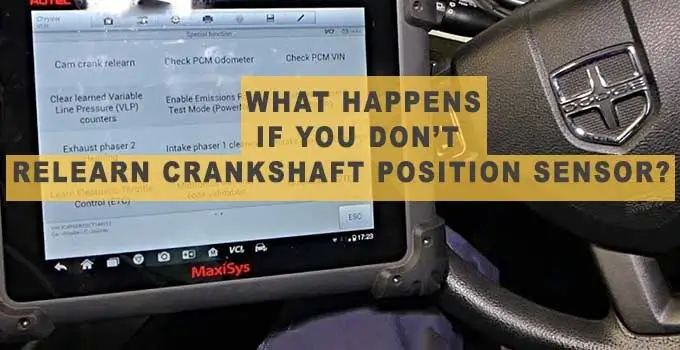
What Happens If You Do Not Relearn a Crankshaft Position Sensor?

By the CarsDailyHub Editorial Team | Automotive writers; every article fact-checked against OEM service documentation and OBD-II standards | Updated June 2026
Quick Answer: On many vehicles, especially GM, you should perform a crankshaft position variation relearn (CASE relearn) after replacing the crankshaft position sensor or doing related engine work. If you skip it, the engine often still starts and drives, but the computer cannot accurately detect misfires, so it may set code P0315 (crankshaft position system variation not learned) and turn on the check engine light. On some vehicles, a missing relearn can also cause a no-start or hard-start. The relearn itself takes only a few minutes with a capable scan tool.
This guide explains the crankshaft position (CKP) variation relearn and what happens when it is skipped. Procedures vary by manufacturer, follow your service information. Last reviewed: June 2026.
Table of Contents
- What the Crankshaft Relearn Actually Does
- Do All Cars Need It?
- What Happens If You Skip It
- The P0315 Code Explained
- Will the Car Still Run?
- How to Do the Relearn
- Frequently Asked Questions
- Sources & References
What the Crankshaft Relearn Actually Does
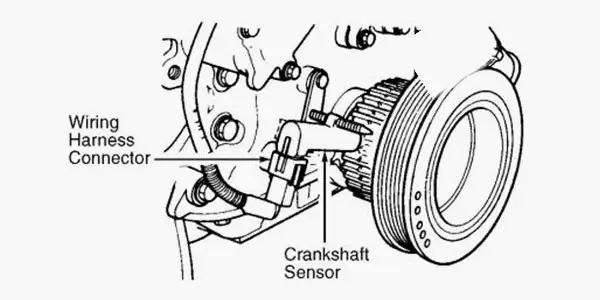
The crankshaft position sensor reads a toothed reluctor wheel on the crankshaft to tell the computer exactly where each piston is and how fast the crank is spinning. To detect a misfire, the computer watches for tiny slowdowns in crank speed each time a cylinder fails to fire properly.
The problem is that no reluctor wheel is machined perfectly, there are minute tooth-to-tooth variations. The variation relearn (also called CASE relearn, crank relearn, or CKP variation learn) teaches the computer the exact pattern of those imperfections so it can tell the difference between a real misfire and normal manufacturing variation. Without that learned baseline, the misfire monitor cannot work accurately.
Do All Cars Need It?
Not every vehicle requires a relearn. It is most associated with GM vehicles, which specifically call for a crankshaft variation relearn after replacing the CKP sensor, the PCM, the crankshaft, or certain engine components. Many other manufacturers either relearn automatically over normal driving or do not require the procedure at all for a sensor swap.
The way to know is your service information for that exact vehicle. If the procedure exists and the manufacturer calls for it, skipping it leaves the misfire monitor incomplete and usually triggers a code.
What Happens If You Skip It
On a vehicle that requires the relearn, skipping it typically causes one or more of these:
- A P0315 code sets (“Crankshaft Position System Variation Not Learned”) and the check engine light comes on.
- Misfire detection is disabled or inaccurate, so the computer cannot reliably flag real misfires, which is both a drivability blind spot and an emissions-monitor gap.
- Readiness monitors stay incomplete, which can cause an emissions test to fail until the relearn and drive cycles are done.
- On some vehicles, a no-start or hard-start, if the computer will not run properly without the learned values after certain repairs.
In short, the engine may seem fine, but the computer is partly “blind” to misfires and will keep nagging with a code.
The P0315 Code Explained
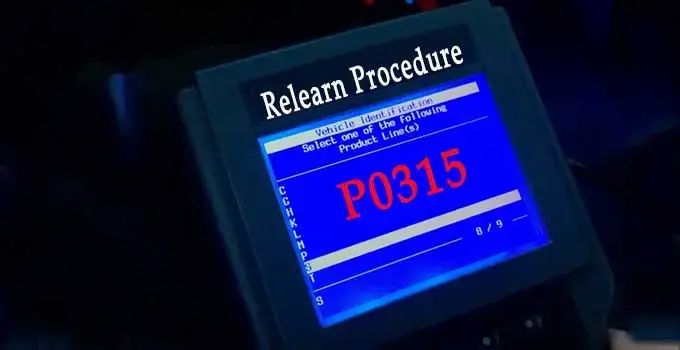
P0315 is “Crankshaft Position System Variation Not Learned.” It is not telling you a part has failed, it is telling you the relearn step was never completed. The computer needs the variation values stored, and until they are, it flags P0315.
The fix for P0315 is almost always simply to perform the relearn procedure, not to replace parts. If P0315 returns after a correct relearn, then you investigate further, a reluctor wheel issue, a sensor problem, or low fuel preventing the relearn from completing.
Will the Car Still Run?
In most cases, yes, the engine starts and drives with the relearn skipped, which is why some people think the step is optional. But “runs” is not the same as “correct.” Misfire detection is compromised, the check engine light is on, and the car cannot pass an emissions test with an incomplete monitor and an active code.
There are exceptions. On certain vehicles and after certain repairs, the missing relearn (or related lost adaptation data) can cause hard starting or a no-start. So while many cars tolerate the skipped step in the short term, it is not something to leave undone.
How to Do the Relearn
The relearn needs a scan tool that supports the function (many basic code readers do not). A typical GM-style procedure:
- Make sure the fuel level is above roughly a quarter tank, the procedure usually requires it.
- Bring the engine to operating temperature.
- With the scan tool, select the Crankshaft Position Variation Learn function.
- Follow the prompts, which usually involve a controlled acceleration to a set RPM and then a closed-throttle deceleration so the computer can read the crank pattern under fuel cut-off.
- The tool confirms when the relearn completes. Clear P0315 and verify it does not return.
If you do not have a capable scan tool, a shop or many auto parts stores with the right equipment can perform the relearn quickly.
Frequently Asked Questions
Q: Will my car run without a crankshaft sensor relearn?
A: Usually yes, the engine typically still starts and drives. But the computer cannot accurately detect misfires without the learned variation values, so it sets a P0315 code and turns on the check engine light, and the car cannot pass an emissions test with that incomplete monitor. On some vehicles, skipping the relearn can also cause hard starting, so it is best to complete it.
Q: What is the P0315 code?
A: P0315 means “Crankshaft Position System Variation Not Learned.” It is not a failed part, it means the variation relearn step was never done. The fix is almost always just to perform the relearn with a capable scan tool. Only if P0315 returns after a proper relearn do you look deeper at the sensor or reluctor wheel.
Q: Do all cars need a crankshaft relearn after replacing the sensor?
A: No. The procedure is most associated with GM vehicles, which specifically require it after replacing the CKP sensor, PCM, or related parts. Many other brands relearn automatically during normal driving or do not require it for a sensor swap. Check the service information for your specific vehicle to be sure.
Q: Can I do the crankshaft relearn without a scan tool?
A: Generally no. The relearn is a guided function that needs a scan tool capable of commanding it, and most basic code readers cannot. Some enhanced apps and mid-range or professional scanners support it. If you do not have one, a shop or a suitably equipped parts store can run the procedure in a few minutes.
Q: Is it safe to drive with P0315 for a while?
A: The car generally drives fine, but misfire detection is compromised and the check engine light is on, so you would not catch a developing misfire as early, and you cannot pass emissions. Because the relearn is quick and inexpensive, it is better to complete it promptly rather than drive with the monitor disabled.
Sources & References
- General Motors service information for crankshaft position variation (CASE) relearn
- SAE J2012 OBD-II code definition (P0315)
- Manufacturer relearn procedures and prerequisites
- Scan tool manufacturer documentation for CKP relearn functions
Related articles on CarsDailyHub:
– OBD Codes and Diagnostics: Complete Guide
– Will Disconnecting the Battery Reset a Crankshaft Sensor?
– P0315 Crankshaft Relearn Procedure
– What to Do After Replacing a Crankshaft Sensor