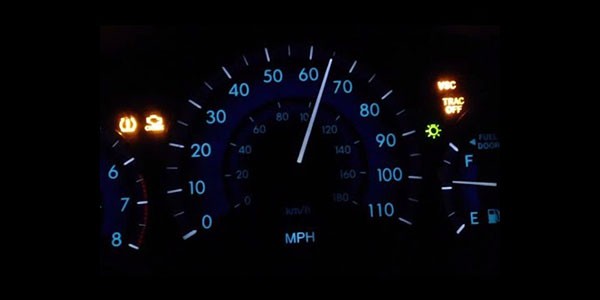
Toyota Sienna Check Engine, VSC & TRAC OFF Lights: Causes & Fix

By the CarsDailyHub Editorial Team | Automotive writers; every article fact-checked against Toyota’s owner’s manual and OEM service documentation | Updated June 2026
Quick Answer: When the check engine, VSC OFF, and TRAC OFF lights illuminate together on a Toyota Sienna, it almost always means a diagnostic trouble code has disabled the traction and stability control systems as a safety precaution. The traction system is not broken. It has been shut down because the engine has a fault. Fix the engine code and the VSC and TRAC OFF lights clear themselves. The most common cause is a loose or leaking fuel cap (P0455/P0441), followed by the C1201 engine control malfunction code.
This guide covers the check engine + VSC OFF + TRAC OFF light combination on 2004-2024 Toyota Sienna minivans. Specifications reference Toyota’s owner’s manual and OEM service documentation. Last reviewed: June 2026.
Table of Contents
- Why Check Engine, VSC, and TRAC OFF Come On Together
- Step 1: Read the Codes Before Buying Parts
- The Codes That Cause This on a Sienna
- Fix 1: The Fuel Cap (Most Common)
- Fix 2: The Purge Valve
- Fix 3: Oxygen Sensor or MAF Sensor
- How to Reset the Lights After the Fix
- Sienna-Specific Known Issues
- Cost Breakdown: DIY vs Shop
- Frequently Asked Questions
- Sources & References
Why Check Engine, VSC, and TRAC OFF Come On Together
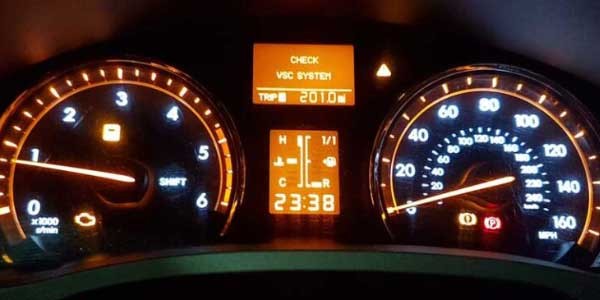
This combination confuses every Sienna owner the first time it happens. You are driving along, the check engine light pops on, and a moment later the VSC OFF and TRAC OFF indicators join it. It looks like three separate problems. It is almost always one.
Here is the logic: Toyota’s Vehicle Stability Control (VSC) and Traction Control (TRAC) systems depend on the engine running correctly. When the engine control module detects a fault and sets a check engine code, it deliberately disables VSC and TRAC as a precaution. An engine that is misfiring or running rough should not have its stability interventions active, because they could behave unpredictably. So the VSC OFF and TRAC OFF lights are symptoms, not the disease. The disease is whatever set the check engine code.
This means: you do not diagnose the VSC OFF and TRAC OFF lights separately. You diagnose the check engine code, fix it, and the traction lights go out on their own after a reset. Mechanics see owners spend hundreds replacing traction control sensors when the actual problem was a $12 fuel cap.
Step 1: Read the Codes Before Buying Parts
Do not guess. Do not search “sienna check engine light” and buy the first part a forum mentions. Every check engine light has a diagnostic trouble code (DTC) stored in the computer, and that code tells you which system is at fault.
Three ways to get the codes:
- Free at any US auto parts store – AutoZone, Advance, O’Reilly, NAPA all read codes for free in the parking lot. Takes 2 minutes.
- Buy a scanner – A basic OBD2 code reader costs $25-40 and pays for itself the second time you use it. The Innova 3100, Autel AL319, and Foxwell NT301 are all adequate for reading and clearing codes on a Sienna.
- Bluetooth OBD2 adapter + phone app – A $15-25 ELM327 Bluetooth dongle plus a free app like Torque (Android) or OBD Fusion (iOS) reads codes on your phone. Convenient and stores a log.
Once you have the code, come back to the next section.
The Codes That Cause This on a Sienna
| Code | System | Meaning | Likelihood | Fix Difficulty |
|---|---|---|---|---|
| P0455 | Evaporative Emissions | Large leak detected in the EVAP system | Very high | Easy (fuel cap) |
| P0441 | Evaporative Emissions | Incorrect purge flow in EVAP system | High | Easy to Medium (cap to purge valve) |
| C1201 | Engine Control | Engine control system malfunction, disables TRAC/VSC | Always present with the other two | Resolves when you fix the P-code |
| P0171 | Fuel System | System too lean (Bank 1) | Medium | Medium (vacuum leak, dirty MAF) |
| P0300 | Ignition | Random/multiple misfire | Medium | Medium (spark plugs, coils) |
| P0420 | Catalyst | Catalyst system efficiency below threshold | Low | Hard (verify before replacing) |
How they relate: P0455 or P0441 is the root cause, a vapor leak in the fuel evaporative system. C1201 is the consequence, the engine computer sees the EVAP fault, flags a general engine control malfunction, and disables traction and stability control. Fix the P-code and the C1201 clears itself.
Fix 1: The Fuel Cap (Most Common)
The fuel cap is the single most common cause of a P0455 or P0441 code on a Sienna. The evaporative emissions system is designed to capture fuel vapor and route it into the engine to be burned. The system is sealed, and the computer monitors it for leaks. A fuel cap that is loose, cracked, or has a hardened seal creates a vapor leak, and the computer sees it as a “large leak” (P0455) or “incorrect purge flow” (P0441).
Step-by-step:
-
Tighten the cap. Remove the fuel cap and reinstall it. Turn it clockwise until it clicks at least once. On most Siennas, one or two clicks. A click means the ratchet mechanism has reached the proper torque and the cap is sealed. If you have been fueling up and just pushing the cap on without clicking it, this is your problem.
-
Clear the code (or wait). After tightening, you can either:
– Drive for 1-3 days. The computer runs an EVAP self-test on most trips, and if the leak is gone, the code clears itself and the lights go out.
– Clear the code immediately with a scanner. The lights go out instantly, but if the leak returns, they come back on the next drive cycle. -
Inspect the cap seal. If the light returns after a few days, remove the cap and look at the rubber O-ring seal. If it is cracked, hardened, or flattened, the cap cannot seal even when tightened. Replace the cap with a genuine Toyota cap (part number 77300-04020 for most Sienna years, $15-25). Aftermarket caps work but fitment can be hit-or-miss.
-
Clean the filler neck. Dirt or debris on the fuel filler neck prevents a good seal. Wipe the neck opening with a clean rag before reinstalling the cap.
Cost: $0 (tighten) to $25 (new cap). Time: 2 minutes. Tools: none.
Fix 2: The Purge Valve
If a new fuel cap does not clear P0455 or P0441, the next most common EVAP culprit is the purge valve (EVAP canister purge solenoid). This valve sits between the charcoal canister and the intake manifold and opens to allow stored vapor into the engine at specific times. When it sticks open or fails to open, the computer sees “incorrect purge flow.”
Symptoms of a failing purge valve:
– P0441 code persists after fuel cap replacement
– Rough idle after refueling (raw fuel vapor entering intake when it should not)
– A whistling or hissing from the fuel tank area after shutdown
– Difficulty starting after refueling (the system is flooded with vapor)
Replacement (intermediate DIY):
- Disconnect the negative battery terminal (10mm socket).
- Locate the purge valve. On the Sienna, it is typically mounted near the intake manifold or on the EVAP line to the canister. Location varies by year and engine (2.7L vs 3.5L), so check a model-specific diagram before starting.
- Disconnect the electrical connector (squeeze the tab and pull).
- Remove the two hose clamps (spring clamp or screw clamp depending on year).
- Pull the valve out of its rubber mount.
- Install the new valve. Use a genuine Toyota part (varies by year, $40-80) or a quality aftermarket like Standard Motor Products.
- Reconnect hoses, electrical connector, and battery.
- Clear the code with a scanner and drive.
Cost: $40-80 (part) DIY; $150-250 at a shop. Time: 30-45 min. Tools: 10mm socket, pliers, flathead screwdriver.
When to call a mechanic: If the code persists after replacing both the cap and the purge valve, the leak is elsewhere in the EVAP system. This requires a smoke test (injecting smoke into the EVAP system to find the leak), which is a shop job ($80-150 for the diagnosis).
Fix 3: Oxygen Sensor or MAF Sensor
If your codes are not EVAP-related (P0455/P0441), the next most common causes on the Sienna are:
P0171 (System too lean): The engine is getting too much air or not enough fuel. Common causes on the Sienna include a dirty mass airflow (MAF) sensor or a small vacuum leak in the PCV hose.
- Clean the MAF sensor first ($10 for MAF cleaner spray). Remove the sensor from the intake tube, spray the filament with MAF cleaner, let it dry, and reinstall. This fixes P0171 on many Siennas without replacing any parts.
- Check for vacuum leaks. Listen for hissing around the intake manifold and vacuum hoses. A cracked PCV hose is common on the 3.5L V6.
P0420 (Catalyst efficiency): The catalytic converter may be failing, but verify before replacing. A failing upstream oxygen sensor can mimic P0420 and costs $120, not $900. Test the O2 sensors first.
How to Reset the Lights After the Fix
Once you have fixed the underlying problem, the VSC OFF and TRAC OFF lights need to be cleared. Two methods:
Method 1, OBD2 scanner (preferred):
Plug in your scanner, navigate to “Clear Codes” or “Erase Codes,” and confirm. All three lights (check engine, VSC OFF, TRAC OFF) go out immediately. This is the clean method and confirms the computer has accepted the fix.
Method 2, Battery disconnect (no scanner):
1. Turn off the engine and all electrics.
2. Disconnect the negative (black) battery terminal with a 10mm socket.
3. Wait 3-5 minutes. This allows the capacitors in the ECM to discharge fully. Shorter than 3 minutes and the codes may survive.
4. Reconnect the negative terminal and tighten.
5. Start the engine. The lights should be off. If they return within a few drive cycles, the problem is not fixed.
Important: Disconnecting the battery resets the radio presets, clock, and idle and fuel-trim adaptations. The engine may idle slightly rough for the first 10-20 minutes of driving as the computer relearns. This is normal.
Sienna-Specific Known Issues
2004-2010 Sienna (2nd gen): The EVAP charcoal canister is located under the vehicle and is prone to cracking from road debris. If P0455 persists after replacing the cap and purge valve, inspect the canister for physical damage. Replacement costs $150-300 for the part.
2011-2020 Sienna (3rd gen, 3.5L V6): The PCV hose on the 3.5L V6 is known to crack and cause a vacuum leak, triggering P0171. The hose is $15-25 but is difficult to access on the rear of the engine. Some owners report needing to remove the intake plenum to reach it.
2018-2020 Sienna: Some models have a known issue with the canister vent valve sticking, causing P0441. Toyota issued a technical service bulletin for this. Check with a dealer using your VIN to see if coverage applies.
All Sienna hybrids (2021+): The hybrid Sienna has a hybrid system warning light in addition to the check engine light. If you see both, the issue may be in the hybrid powertrain, not the EVAP system. Have a hybrid-qualified shop diagnose.
Cost Breakdown: DIY vs Shop
| Fix | DIY Cost | Shop Cost (US avg) | Time |
|---|---|---|---|
| Tighten fuel cap | $0 | $0 | 2 min |
| Replace fuel cap (genuine Toyota) | $15-25 | $25-60 | 2 min |
| Replace purge valve | $40-80 (part) | $150-250 | 30-45 min |
| Clean MAF sensor | $10 (cleaner) | $50-80 | 15 min |
| EVAP smoke-test diagnosis | – | $80-150 | 30-60 min |
| Charcoal canister replacement | $150-300 (part) | $350-550 | 1-2 hrs |
| Oxygen sensor replacement | $50-150 (part) | $150-350 | 30-60 min |
| OBD2 code scan | $25-40 (scanner) | Free at parts stores; $80-150 at shop | 5-15 min |
When to call a mechanic instead of DIY:
– P0420 (catalyst) code: replacing a $800+ catalytic converter on a guess is the most expensive mistake Sienna owners make. Diagnose first. A failing O2 sensor mimics P0420 and costs $120, not $900.
– Any code you cannot identify after scanning
– Hybrid system warnings on 2021+ Sienna hybrids
Frequently Asked Questions
Q: Is it safe to drive my Sienna with the check engine, VSC, and TRAC OFF lights on?
A: In most cases, yes, carefully. The vehicle is drivable, but traction and stability control are disabled, so avoid wet roads, aggressive cornering, and highway speeds in bad weather. The underlying engine issue is usually minor (a fuel cap or purge valve), but you will not know for certain until you read the code. If the check engine light is flashing, that means an active misfire. Reduce speed and get to a shop immediately, as raw fuel can damage the catalytic converter.
Q: Will the VSC and TRAC OFF lights go out on their own if I fix the check engine code?
A: Not always immediately. The check engine light may self-clear after a few drive cycles if the computer confirms the fix, but the VSC OFF and TRAC OFF lights often require a manual code clear with a scanner or a battery disconnect. Clearing the codes after the fix is the reliable way to reset all three lights at once.
Q: I tightened my gas cap and the light is still on, does that mean the cap was not the problem?
A: Not necessarily. The computer runs the EVAP self-test on a specific drive cycle, usually after the fuel level drops below a certain point and the engine is fully warmed up. It can take 1-3 days of normal driving for the test to run and the code to clear. If the light is still on after a week of driving with a properly tightened or new cap, the leak is elsewhere. Most likely the purge valve or a cracked EVAP hose.
Q: Can a bad battery cause the check engine, VSC, and TRAC OFF lights to come on?
A: Yes, indirectly. A weak battery causes low voltage during cranking, which can cause sensors to report erroneous readings and trigger random codes. If you are seeing multiple unrelated codes or the lights flicker during startup, test the battery first. A healthy battery should read 12.6V at rest and not drop below 9.6V during cranking. Many “mystery” check engine lights on Siennas trace to an aging battery.
Q: How much does it cost to fix the check engine, VSC, and TRAC OFF lights on a Sienna?
A: It depends entirely on the code. The most common fix, a fuel cap, costs $0 to $25. A purge valve runs $40-80 in parts. A MAF cleaning costs $10 for cleaner. The expensive outlier is a catalytic converter (P0420), which can run $800-1,200, but always diagnose before replacing. Always read the code before estimating cost.
Q: Does the Toyota Sienna have known issues with these lights?
A: The 2004-2010 Sienna has a known issue with the EVAP charcoal canister cracking from road debris. The 2011-2020 Sienna with the 3.5L V6 has a known PCV hose cracking issue that causes P0171. The 2018-2020 Sienna has a known canister vent valve issue (P0441) that may be covered by a TSB. Check with a Toyota dealer using your VIN to see if any extended warranty coverage applies.
Sources & References
- Toyota Motor Corporation – 2004-2024 Toyota Sienna Owner’s Manuals (model-year specific; available at toyota.com/owners)
- Toyota Technical Service Bulletins covering EVAP canister, PCV hose, and canister vent valve (VIN-specific; available through Toyota dealers)
- SAE J2012 – OBD-II Diagnostic Trouble Code definitions (P0455, P0441, C1201, P0171, P0300, P0420)
- NHTSA – Vehicle complaint database for Toyota Sienna by model year (nhtsa.gov)
- RepairPal – Average repair cost estimates for Toyota Sienna by repair type
Related articles on CarsDailyHub:
– Car Problem Solver: Complete Symptom Guide
– Trac Off & Check Engine Light on Toyota Tacoma: Causes, Codes & Fix
– Toyota C1201 Code: Causes, Symptoms & How to Fix It
– How to Fix Check VSC System Toyota Camry
– Toyota Dashboard Warning Lights: What Every Symbol Means