Suzuki Swift Dashboard Lights and Meanings: What Each Symbol Means

By the CarsDailyHub Editorial Team | Automotive writers; every article fact-checked against Suzuki’s owner’s manual and OEM service documentation | Updated June 2026
Quick Answer: The lights that mean stop driving now on a Suzuki Swift are the red engine coolant temperature light, the red oil pressure light, the red charging (battery) light, and the red brake warning light. Amber lights such as check engine, ESP, ABS, and the EPS power-steering light mean the car is still drivable but needs attention soon. A flashing check engine light is an active misfire, treat it like a red light.
This guide covers dashboard symbols for the 2010-2024 Suzuki Swift, including the Boosterjet turbo and SHVS mild-hybrid models. Specifications reference Suzuki’s owner’s manual and OEM service documentation. Last reviewed: June 2026.
Table of Contents
- How Suzuki Swift Dashboard Lights Work (Color Logic)
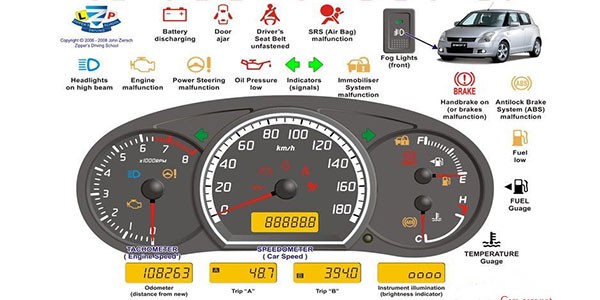
- Complete Suzuki Swift Warning Light Table
- Red Warning Lights, Stop Driving Immediately
- Amber/Yellow Warning Lights, Diagnose Soon
- Green & Blue Indicator Lights (Informational)
- Swift-Specific Lights (SHVS Hybrid, A-STOP)
- What to Do When a Light Comes On (Decision Flow)
- How Much It Costs to Diagnose Swift Dashboard Lights
- Frequently Asked Questions
- Sources & References
How Suzuki Swift Dashboard Lights Work (Color Logic)
Suzuki uses the standard three-tier colour system on the Swift:
- Red = danger. A system is failing or about to cause damage. Pull over safely and switch off the engine.
- Amber/Yellow = caution. The car is still drivable but needs attention soon.
- Green/Blue = informational. A feature is on, such as the headlights, cruise, or A-STOP. No action needed.
The Swift uses ESP (Electronic Stability Programme) as its name for stability control, so an ESP light relates to traction and stability rather than the engine. On mild-hybrid (SHVS) models you will also see hybrid-system and battery indicators that pure-petrol Swifts do not have.
A flashing check engine light means an active misfire and should be treated like a red light, reduce speed and get to a workshop the same day.
Complete Suzuki Swift Warning Light Table
| Symbol | Name | Color | Severity | What It Means | Action |
|---|---|---|---|---|---|
| Thermometer in liquid | Engine Coolant Temp | Red | Stop now | Engine overheating | Pull over, stop, let cool 20+ min |
| Oil can with drip | Oil Pressure | Red | Stop now | Low oil pressure | Stop, check oil, do not restart if low |
| Battery | Charging System | Red | Stop now | Alternator not charging | Reduce load, drive to workshop now |
| (!) in circle / BRAKE | Brake System | Red | Stop now | Handbrake, low fluid, or fault | Release handbrake; check fluid; tow if needed |
| Engine outline | Check Engine | Amber | Diagnose soon | Emissions/engine fault | Tighten fuel cap first; scan if it stays on |
| Engine outline flashing | Active Misfire | Amber flashing | Stop now | Misfire damaging catalytic converter | Reduce speed and load, workshop today |
| Car skidding (ESP) | Stability (ESP) | Amber | Info/diagnose | ESP active or fault | Flashing = normal; steady = scan |
| ESP OFF | Stability Off | Amber | Info | ESP switched off | Re-enable for normal driving |
| ABS in circle | Anti-Lock Brakes | Amber | Diagnose soon | ABS disabled, base brakes work | Drive carefully, get it checked |
| Steering wheel with (!) | EPS Power Steering | Amber/Red | Diagnose soon | Electric power steering fault | Steering may go heavy; diagnose soon |
| Tire with (!) | Tire Pressure (TPMS) | Amber | Check soon | One or more tyres low | Inflate to placard spec |
| Person with airbag | SRS Airbag | Amber | Diagnose soon | Airbag fault | Get it diagnosed |
| Battery with “12V”/hybrid | SHVS Hybrid (mild hybrid) | Amber | Diagnose soon | Mild-hybrid system fault | Scan; check 12V and lithium battery |
| A in circle (A-STOP) | Auto Idle Stop | Amber/Green | Info | Stop-start status | Amber = temporarily unavailable |
| Fuel pump | Low Fuel | Amber | Refuel soon | Low fuel level | Refuel soon |
| Headlight beams | Low Beam | Green | Info | Headlights on | Normal |
| Headlight with lines | High Beam | Blue | Info | High beams on | Dim for oncoming traffic |
| Arrows | Turn Signal | Green | Info | Signal active | Normal |
Red Warning Lights, Stop Driving Immediately
Engine Coolant Temperature
The red thermometer means the engine is overheating. On the small Swift engines, common causes are low coolant, a failing thermostat, or a tired water pump. Pull over, switch off, and wait 20 to 30 minutes before opening any cap. Top up with the correct Suzuki long-life coolant if low. If the light returns after topping up, do not drive.
Oil Pressure
The red oil can means low oil pressure. Stop the engine, wait five minutes, and check the dipstick (most Swift petrol engines use 0W-20 or 5W-30). Top up if low. If the level is normal but the light stays on, do not restart, a tow is cheaper than a new engine.
Charging System
The red battery means the alternator has stopped charging. On SHVS mild-hybrid Swifts, a charging fault can also relate to the integrated starter-generator. Switch off accessories and drive directly to a workshop.
Brake System (Red)
Check the handbrake, then the brake fluid. A soft pedal with the red brake light means a leak, do not drive.
Amber/Yellow Warning Lights, Diagnose Soon
Check Engine Light
The amber engine outline covers emissions and engine faults. A loose fuel cap is a common harmless cause, so tighten it and drive for a day. If it stays on, scan the codes. A flashing light is an active misfire, get to a workshop the same day.
ESP (Stability) and ABS
The ESP light flashing during driving is normal, it means stability control is working on a slippery surface. A steady ESP light, or ESP with the ABS light, points to a fault, often a wheel-speed sensor. Your normal brakes still work with the ABS light on, so drive carefully and have it scanned. If you pressed the ESP OFF switch, simply switch it back on.
EPS (Electric Power Steering)
The steering-wheel icon with an exclamation mark means the electric power steering has a fault, and the steering can suddenly feel heavy. The Swift uses electric assist, so this is a known item to watch. The car is still controllable, but get it diagnosed promptly. Sometimes a simple battery or connector issue triggers it.
Tyre Pressure (TPMS)
A low-tyre warning means at least one tyre is below the placard pressure (usually around 32 to 35 psi cold). Inflate all four and, if equipped, run the TPMS set/reset procedure from the dash menu.
Green & Blue Indicator Lights (Informational)
- Green headlight icon: low beams on.
- Blue headlight icon: high beams on. Dim for oncoming traffic.
- Green arrows: indicators or hazards.
- Green “A” (A-STOP): the auto idle-stop system is ready and will shut the engine off at a standstill to save fuel.
- Green cruise / set: cruise control active.
Swift-Specific Lights (SHVS Hybrid, A-STOP)
SHVS mild-hybrid system. SHVS (Smart Hybrid Vehicle by Suzuki) adds a small integrated starter-generator and a compact lithium-ion battery that assist the petrol engine and run the stop-start system. A hybrid-system warning usually points to the 12V battery, the lithium battery, or the starter-generator. It does not mean a big high-voltage pack like a full hybrid, but it should still be scanned.
A-STOP (auto idle stop) amber light. When the “A” symbol shows amber rather than green, the stop-start system is temporarily unavailable. This is usually normal: it happens when the battery charge is low, the cabin is still heating or cooling, the engine is cold, or you are on a steep slope. If A-STOP never works, the most common cause is a weak or ageing battery, the system needs a healthy battery to restart the engine reliably.
Master warning and information messages. Like other modern cars, the Swift can show a general warning symbol with a text message in the display. Always read the message, as it names the actual fault.
What to Do When a Light Comes On (Decision Flow)
- Is it red? Pull over within the next minute and switch off. Check the relevant fluid once cool. Do not drive if a red light returns after topping up.
- Is it the check engine light and flashing? Active misfire. Reduce speed and load and get to a workshop today.
- Is it the EPS steering light? The steering may go heavy. Drive carefully and get it diagnosed soon.
- Is it amber and steady (ABS, ESP, TPMS, airbag)? Note it and schedule diagnosis within the week.
- Is the A-STOP light amber? Usually normal; if stop-start never works, have the battery tested.
- Is it green or blue? No action. It is informational.
How Much It Costs to Diagnose Swift Dashboard Lights
| Service | DIY Cost | Workshop Cost (approx.) | Time |
|---|---|---|---|
| OBD2 code scan | $25-50 (scanner) | $40-90 | 10-20 min |
| Fuel cap replacement | $15-30 | $30-60 | 2 min |
| 12V battery replacement | $80-150 | $120-220 | 30 min |
| Wheel speed sensor (ABS) | $30-70 (part) | $130-280 | 30-60 min |
| EPS diagnosis | – | $80-160 | 30-60 min |
| Thermostat replacement | $20-50 (part) | $150-320 | 1-2 hrs |
| TPMS sensor replacement | $40-80 (part) | $90-180 | 30-45 min |
| Brake fluid top-up | $7 (fluid) | $20-40 | 5 min |
Costs vary by country and whether you use a Suzuki dealer or an independent. Mild-hybrid (SHVS) battery components can cost more, so have hybrid warnings diagnosed before replacing parts.
Frequently Asked Questions
Q: Why is the A-STOP light amber on my Suzuki Swift?
A: An amber A-STOP light means the auto idle-stop system is temporarily unavailable. This is usually normal and happens when the battery charge is low, the cabin is still warming or cooling, the engine is cold, or you are on a slope. If stop-start never works, the most likely cause is a weak or ageing battery, which the system needs to restart the engine reliably.
Q: What does the EPS light mean on a Suzuki Swift?
A: The steering-wheel icon with an exclamation mark is the electric power steering warning. It means the assist system has a fault, and the steering can suddenly feel much heavier than usual. The car is still controllable, but get it diagnosed promptly. Sometimes a low battery or a loose connector triggers it rather than a failed steering motor.
Q: My Swift’s check engine and ESP lights are both on. What does that mean?
A: An engine fault can cause the stability system to flag too, so the two lights sometimes appear together. Start by checking the fuel cap and scanning for codes. If the ESP light is on by itself and flashing only during slippery driving, that is normal stability-control activity, not a fault.
Q: Is it safe to drive my Suzuki Swift with the ABS light on?
A: Yes, carefully. Your normal brakes still work, so stopping distance is unaffected in routine driving. You only lose anti-lock function during a hard, panic stop. The most common cause is a dirty or failing wheel-speed sensor, have it scanned and repaired soon.
Q: What does the SHVS hybrid warning light mean?
A: On mild-hybrid Swifts, the SHVS warning points to the small hybrid system, usually the 12V battery, the compact lithium battery, or the integrated starter-generator. It is not a large high-voltage pack like a full hybrid, but it should be scanned so you replace the right component rather than guessing.
Q: Why does my Swift’s check engine light flash?
A: A flashing check engine light means an active misfire. Unburned fuel is reaching the exhaust and can overheat the catalytic converter within minutes. Reduce speed, avoid hard acceleration, and get to a workshop the same day. Common causes are worn spark plugs or a failing ignition coil.
Sources & References
- Suzuki Motor Corporation, 2010-2024 Suzuki Swift Owner’s Manuals (market and model-year specific)
- Suzuki technical literature on SHVS mild-hybrid and ENG A-STOP systems
- NHTSA and regional safety databases for the Suzuki Swift
- RepairPal and independent-workshop cost data for context
- OBD-II/EOBD diagnostic standards per SAE J2012 / ISO 15031
Related articles on CarsDailyHub:
– Complete Guide to All Car Dashboard Warning Lights
– Nissan Qashqai Dashboard Symbols and Meanings
– Toyota Corolla Dashboard Symbols and Meanings
– Why Your Car Has a Key Warning Light
– How to Use an OBD2 Scanner