C1201 Brake Boost Sensor Circuit Explained

By the CarsDailyHub Editorial Team | Automotive writers; every article fact-checked against OEM service documentation and OBD-II standards | Updated June 2026
Quick Answer: On many Toyota and Lexus vehicles, C1201 is “Engine Control System Malfunction,” a chassis code the brake/stability controller sets when it detects an engine-side fault and disables VSC and traction control. The brake boost (master cylinder pressure) sensor is part of this picture because the stability system relies on its pressure signal; a fault in that sensor’s circuit, its supply, signal, or ground wiring, can contribute to C1201 and related brake-assist faults. Diagnosing it means checking the sensor’s reference voltage, signal, and ground, plus any engine code that set first.
This guide explains the brake boost / master cylinder pressure sensor circuit and how it relates to C1201 on Toyota and Lexus vehicles. Last reviewed: June 2026.
Table of Contents
- What the Brake Boost Sensor Does
- How the Circuit Works
- How It Relates to Code C1201
- Symptoms of a Circuit Fault
- How to Diagnose the Circuit (Step by Step)
- Common Causes and Fixes
- Frequently Asked Questions
- Sources & References
What the Brake Boost Sensor Does
The brake boost sensor, also called the master cylinder pressure sensor or brake fluid pressure sensor, measures the hydraulic pressure your foot creates at the brakes. The stability and traction control system (Toyota’s VSC) uses that pressure reading to know how hard you are braking, which it combines with wheel-speed, steering-angle, and yaw data to decide when and how to intervene.
In other words, the sensor is one of the inputs the safety system depends on to do its job. If its signal is missing or implausible, the controller cannot trust the brake-pressure data and will flag a fault and often disable VSC/TRAC as a precaution.
How the Circuit Works
The sensor circuit has three basic wires, and understanding them is the key to diagnosis:
- Reference voltage (supply): the controller feeds the sensor a steady reference voltage, commonly 5 volts.
- Signal: the sensor returns a voltage that rises and falls with brake pressure. Low or no pressure is a low voltage; hard braking is a higher voltage.
- Ground: the sensor’s return path to the controller.
The controller continuously checks that the signal stays within a plausible window for the given conditions. If the signal is stuck high, stuck low, out of range, or open, the controller registers a circuit fault. Because the same controller manages stability and ties into engine torque requests, a serious fault here can roll up into the broader C1201 “engine control system malfunction” picture.
How It Relates to Code C1201
C1201 on Toyota and Lexus is defined as “Engine Control System Malfunction.” It is a chassis (C) code, but it is usually a consequence of an engine-side problem rather than a brake-specific fault on its own. The stability/skid-control ECU sets C1201 when the engine control system reports a fault, and it then disables VSC and TRAC because stability intervention is unsafe with a misbehaving engine.
The brake boost sensor circuit enters the story in two ways. First, the same skid-control ECU monitors both the brake pressure sensor and engine status, so a problem in this area can appear alongside C1201. Second, you should always identify the primary engine code that set first (for example an evaporative, misfire, or sensor code on the engine), because fixing that primary fault usually clears C1201 and restores VSC/TRAC. Treat the brake boost sensor circuit as one input to verify, not automatically the root cause.
Symptoms of a Circuit Fault
- VSC and TRAC (and the check engine light) on together, the hallmark of C1201.
- Reduced or altered brake-assist behavior in some cases.
- Stability control disabled, so the system will not intervene in a slide.
- Stored C-codes referencing the master cylinder pressure sensor circuit, often alongside C1201.
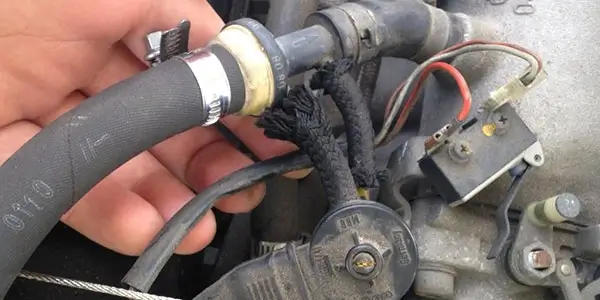
How to Diagnose the Circuit (Step by Step)
- Pull all codes and note the order. Identify any engine (P) code that set first, that is often the true root cause behind C1201.
- Check the reference voltage. With the connector and key on, confirm the sensor is receiving its supply voltage (commonly 5V) against spec.
- Check the ground. Verify a clean ground path with minimal resistance.
- Watch the signal on live data. With the engine running, the brake pressure reading should sit near zero with your foot off the pedal and rise smoothly as you press. A flat, pinned, or jumpy signal indicates a fault.
- Wiggle test the connector and harness while watching the signal for dropouts.
- Inspect the connector for corrosion, bent pins, or moisture.
- Address the primary engine code first, then clear C1201 and see whether it returns.
Common Causes and Fixes
| Cause | Fix |
|---|---|
| Corroded or loose sensor connector | Clean and reseat, or repair the connector |
| Damaged signal/reference/ground wire | Repair or replace the affected wiring |
| Failed master cylinder pressure sensor | Replace the sensor per the service procedure |
| Primary engine fault setting C1201 | Diagnose and fix the underlying engine code |
| Low system voltage / weak battery | Restore healthy charging and battery |
Because C1201 is usually downstream of an engine fault, resist replacing the brake pressure sensor first. Confirm with circuit testing and live data, and fix any primary engine code before condemning the sensor.
Frequently Asked Questions
Q: Is C1201 a brake problem or an engine problem?
A: C1201 is defined as “Engine Control System Malfunction,” so despite being a chassis (C) code, it usually originates from an engine-side fault. The stability ECU sets it and disables VSC and traction control as a precaution. Always look for the primary engine code that set first, fixing that typically clears C1201, rather than assuming it is a brake-specific failure.
Q: What does the brake boost sensor have to do with C1201?
A: The brake boost (master cylinder pressure) sensor is one of the inputs the stability controller uses, and the same controller flags C1201. A circuit fault in that sensor can appear alongside C1201, so it is worth verifying its supply, signal, and ground. But in most cases the brake sensor is fine and the real cause is an engine fault that triggered C1201.
Q: Can I drive with C1201 and the VSC light on?
A: You can usually drive carefully, but stability and traction control are disabled, so avoid wet or slippery roads and hard cornering until it is fixed. Have the codes read promptly. If a check engine light is also flashing, that signals an active misfire and you should get to a shop the same day.
Q: How do I test the brake boost sensor circuit?
A: Check three things at the connector: the reference voltage (commonly 5V), a clean ground, and the signal voltage on live data, which should sit near zero with the pedal released and rise smoothly as you brake. A wiggle test of the harness while watching the signal helps find intermittent wiring faults. Compare all readings to the service specification.
Q: Will clearing C1201 fix it?
A: Only temporarily, if the underlying fault remains. Clearing C1201 turns the VSC and check engine lights off, but they return once the system re-detects the problem. Identify and repair the primary engine fault (and any genuine sensor or wiring issue) first, then clear the code to confirm the repair held.
Sources & References
- Toyota and Lexus service information for skid-control ECU and master cylinder pressure sensor circuits
- Toyota definition of C1201 (Engine Control System Malfunction)
- SAE/ISO chassis diagnostic standards
- Manufacturer wiring diagrams and reference-voltage specifications
Related articles on CarsDailyHub:
– OBD Codes and Diagnostics: Complete Guide
– C1201 Brake Boost Sensor Troubleshooting
– Toyota C1201 Code: Causes, Symptoms and Fix
– How to Fix Check VSC System on a Toyota