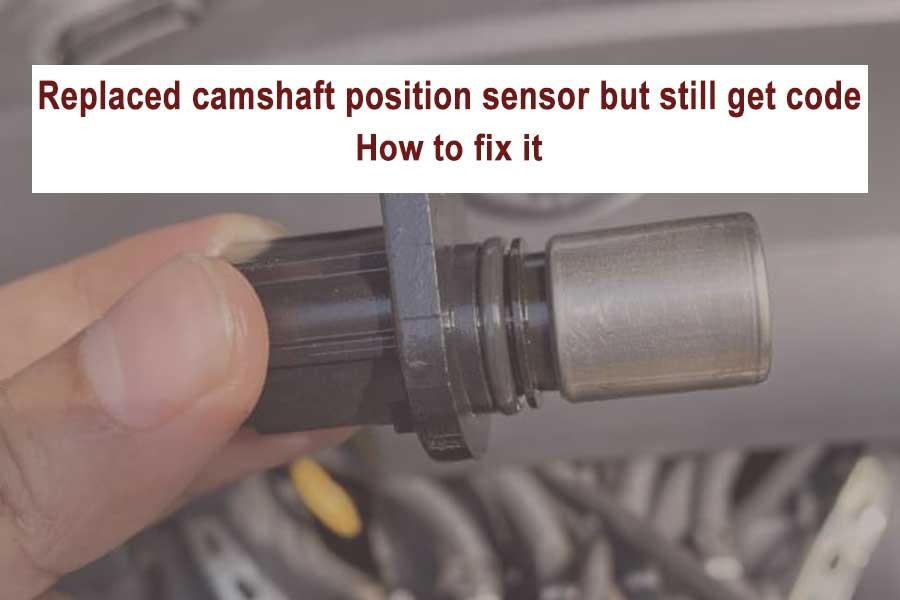
Replaced Camshaft Position Sensor But Still Get Code: How to Fix

By the CarsDailyHub Editorial Team | Automotive writers; every article fact-checked against OEM service documentation | Updated June 2026
Quick Answer: If you replaced the camshaft position sensor but the code persists, the most common causes are: (1) the code was not cleared after replacement, (2) the wiring or connector to the sensor is damaged, (3) the new sensor is defective, (4) the timing belt or chain is off by a tooth, or (5) the ECM needs a relearn procedure. Start by clearing the code with a scanner. If it returns, inspect the wiring connector for corrosion or bent pins. If the wiring is good, the new sensor may be defective. Average additional cost: $0 (clear code) to $80-150 (wiring repair).
This guide covers camshaft position sensor codes that persist after sensor replacement on all vehicle makes. Last reviewed: June 2026.
Table of Contents
- Common Causes Ranked by Likelihood
- How to Diagnose Each Cause
- Fix 1: Clear the Code
- Fix 2: Inspect and Repair Wiring
- Fix 3: Replace the New Sensor
- Fix 4: Check Timing Belt/Chain Alignment
- Fix 5: Perform ECM Relearn
- Cost Breakdown: DIY vs Shop
- Frequently Asked Questions
- Sources & References
Common Causes Ranked by Likelihood
| Cause | Likelihood | Symptoms | Fix Difficulty |
|---|---|---|---|
| Code not cleared after replacement | Very high | Same code, engine runs fine | Easy (clear code) |
| Damaged wiring or corroded connector | High | Same code, intermittent symptoms | Medium |
| Defective new sensor | Medium | Same code, same symptoms | Easy (replace again) |
| Timing belt/chain off by a tooth | Low | Same code, rough running, poor performance | Hard |
| ECM needs relearn procedure | Low | Same code, runs rough after replacement | Medium (needs scanner) |
| Wrong sensor for your vehicle | Low | Same code, may not fit connector | Easy (return and buy correct) |
| Reluctor ring/sync gear damaged | Rare | Same code, metal shavings in oil | Hard (engine disassembly) |
How to Diagnose Each Cause
Step 1: Clear the Code
The most common reason a code persists after sensor replacement is that nobody cleared it. The ECM stores the code and does not automatically remove it just because you replaced the sensor.
Plug in an OBD2 scanner and clear all codes. Drive for 10-15 minutes at varying speeds. If the code does not return, the problem was just the stored code. You are done.
If the code returns immediately or within one drive cycle, move to Step 2.
Step 2: Inspect the Wiring and Connector
Before condemning the new sensor, inspect the wiring between the sensor and the ECM:
-
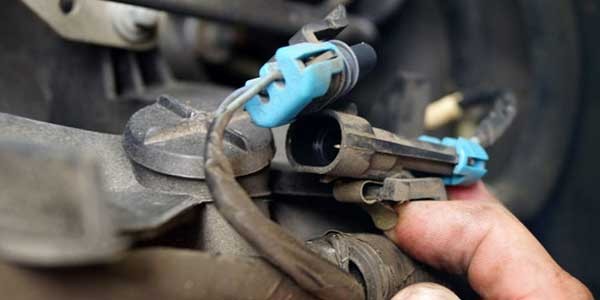
Check the connector. Look for bent pins, pushed-back pins, corrosion, or oil contamination in the connector. A corroded connector is the second most common cause of persistent camshaft sensor codes.
-
Check the wiring harness. Follow the wiring from the sensor connector as far as you can see. Look for chafed insulation, melted wires (from exhaust proximity), or rodent damage.
-
Wiggle test. With the engine running, wiggle the wiring harness near the sensor connector. If the engine stumbles or the code sets intermittently, there is a wiring issue.
-
Check power and ground. Use a multimeter to verify the sensor is receiving power (usually 5V or 12V depending on the sensor type) and has a good ground. If power or ground is missing, the wiring is the problem, not the sensor.
Step 3: Verify the New Sensor
New sensors can be defective. This is more common with cheap aftermarket sensors than with OEM parts.
-
Check the part number. Verify the new sensor matches the old sensor’s part number or is a confirmed cross-reference for your exact vehicle year, make, model, and engine.
-
Try the old sensor. If you still have the old sensor, reinstall it temporarily. If the code is the same with both sensors, the sensor is not the problem. The wiring, timing, or ECM is.
-
Try a different brand. If you used a budget aftermarket sensor, try an OEM or premium brand (ACDelco for GM, Denso for Toyota, Motorcraft for Ford, Bosch for European). Budget sensors have higher failure rates.
Step 4: Check Timing Alignment
If the camshaft sensor code persists with a known-good sensor and good wiring, the timing belt or chain may be off by a tooth. This is especially common after a timing belt replacement.
Symptoms of a timing issue:
– Rough idle
– Poor acceleration
– Reduced fuel economy
– Hard starting
– The camshaft code appears alongside a crankshaft code (P0016 or P0017, cam/crank correlation)
If you recently had the timing belt or chain replaced and the camshaft code appeared afterward, the timing is likely off. Have a mechanic verify the timing marks are aligned correctly.
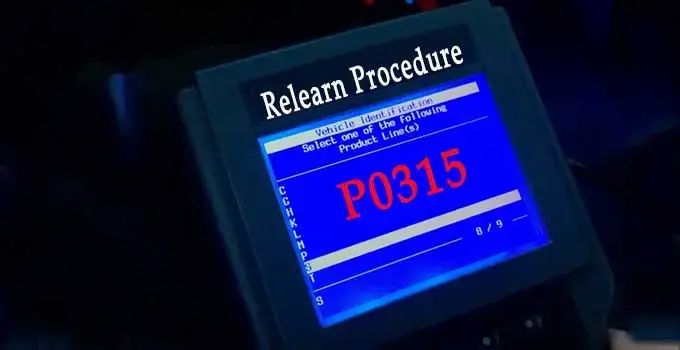
Step 5: ECM Relearn
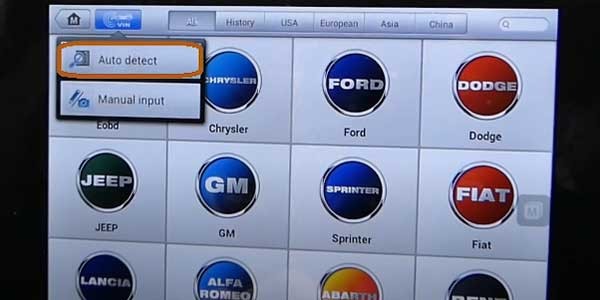
Some vehicles require a camshaft position sensor relearn after replacement, similar to the crankshaft position sensor relearn. This is less common than the crankshaft relearn but applies to some GM, Ford, and European vehicles.
If your vehicle requires a relearn, you need a bidirectional scanner. See our guide on what scanner can relearn a crankshaft position sensor for scanner recommendations that also support camshaft relearn.
Fix 1: Clear the Code
- Plug in an OBD2 scanner.
- Navigate to “Clear Codes” or “Erase Codes.”
- Confirm.
- Drive for 10-15 minutes at varying speeds.
- Check if the code returns.
Cost: $0 (if you have a scanner) or free at any auto parts store. Time: 5 minutes.
Fix 2: Inspect and Repair Wiring
- Disconnect the sensor connector. Inspect both halves for corrosion, bent pins, or oil contamination.
- Clean the connector. Use electrical contact cleaner ($5-10) to spray both halves. Let dry completely.
- Check pin fit. If pins are pushed back, carefully pull them forward with a pick tool. If pins are corroded beyond cleaning, replace the connector (pigtail repair, $10-30).
- Inspect the harness. Follow the wiring from the sensor toward the ECM. Look for damage.
- Repair damaged wires. Cut, strip, and splice with heat-shrink connectors. Do not use twist-and-tape connections.
- Test power and ground. With the ignition ON and sensor connected, back-probe the power wire. You should see 5V or 12V. Back-probe the ground wire with the red probe and black probe to battery positive. You should see 12V (reverse-lit ground test).
Cost: $5-30 (contact cleaner, pigtail repair). Time: 30-60 min. Tools: multimeter, contact cleaner, wire strippers, heat-shrink connectors.
Fix 3: Replace the New Sensor
If the wiring is good and the code persists, the new sensor may be defective.
- Return the sensor if it is still under warranty (most auto parts stores accept returns within 30-90 days).
- Buy an OEM or premium brand sensor. For GM: ACDelco. For Toyota: Denso. For Ford: Motorcraft. For European: Bosch or Hella.
- Install the new sensor and clear the codes.
- Test drive for 10-15 minutes.
Cost: $30-120 (OEM sensor). Time: 15-30 min.
Fix 4: Check Timing Belt/Chain Alignment
If the camshaft code appeared after a timing belt or chain replacement, the timing marks may be misaligned.
- Have a mechanic verify timing. This requires removing the timing cover to check the alignment marks on the camshaft and crankshaft sprockets.
- If the timing is off by one tooth, the mechanic will re-time the engine. This is usually covered under the warranty of the timing belt/chain replacement job if it was done recently.
Cost: $0 (warranty) to $300-800 (re-time). Time: 2-4 hours.
Do not DIY this unless you have experience with timing belt/chain replacement. Getting the timing wrong can destroy the engine on interference engines.
Fix 5: Perform ECM Relearn
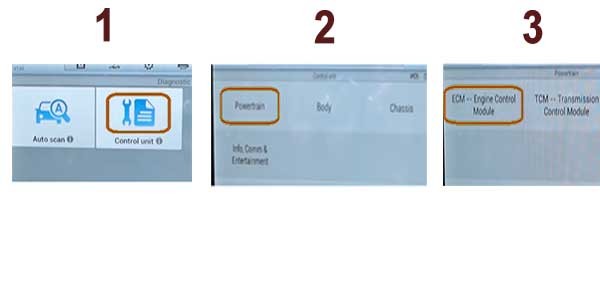
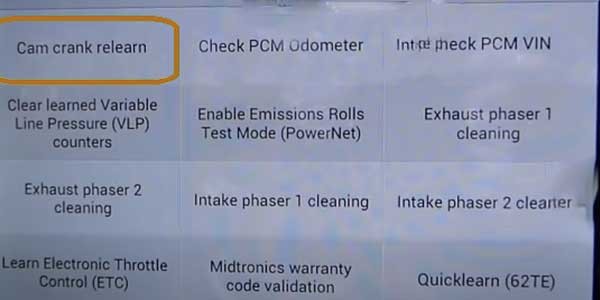
Some vehicles require a camshaft position sensor relearn after replacement. This is done with a bidirectional scanner.
- Connect a bidirectional scanner (Autel MaxiCheck MX900, Launch X431, or equivalent).
- Navigate to: Special Functions > Camshaft Position Sensor Relearn (or similar).
- Follow the on-screen prompts.
- Clear codes and test drive.
Cost: $200-500 (scanner) or $80-150 (shop). Time: 10-15 min.
Cost Breakdown: DIY vs Shop
| Fix | DIY Cost | Shop Cost (US avg) | Time |
|---|---|---|---|
| Clear code with scanner | $25-40 (scanner) | Free at parts stores | 5 min |
| Clean connector | $5-10 (contact cleaner) | $50-80 | 15-30 min |
| Replace connector pigtail | $10-30 (part) | $80-150 | 30-60 min |
| Replace sensor with OEM | $30-120 (part) | $100-250 | 15-30 min |
| Timing belt/chain re-time | – | $300-800 | 2-4 hrs |
| ECM relearn (scanner) | $200-500 (scanner) | $80-150 | 10-15 min |
| Full diagnosis | – | $80-150 | 30-90 min |
Frequently Asked Questions
Q: Why is the code still there after I replaced the camshaft position sensor?
A: The most common reason is that the code was not cleared after replacement. The ECM stores the code and does not automatically remove it just because you replaced the sensor. Clear the code with an OBD2 scanner and drive for 10-15 minutes. If the code does not return, the problem was just the stored code. If it returns, the wiring, the new sensor, or the timing may be the issue.
Q: Can a new camshaft position sensor be defective?
A: Yes. New sensors can be defective, especially budget aftermarket brands. If the code persists after clearing it and the wiring is good, try an OEM or premium brand sensor. For GM use ACDelco, for Toyota use Denso, for Ford use Motorcraft, for European use Bosch. Return the defective sensor to the store for a refund or exchange.
Q: Do I need to do a relearn after replacing the camshaft position sensor?
A: On most vehicles, no. The ECM self-learns the camshaft position during the first few drive cycles. However, some GM, Ford, and European vehicles require a scanner-based relearn procedure. If the code persists after clearing it and the wiring and sensor are good, check whether your vehicle requires a relearn. See our guide on scanners for CPS relearn for details.
Q: Can bad wiring cause a camshaft sensor code even with a new sensor?
A: Yes. A corroded connector, chafed wire, or bent pin can cause the same code as a bad sensor. Before condemning the new sensor, inspect the connector for corrosion and the wiring for damage. Use electrical contact cleaner on the connector. If the pins are corroded beyond cleaning, replace the connector with a pigtail repair kit ($10-30).
Q: Could the timing belt be off if the camshaft code persists?
A: Yes, especially if the code appeared after a timing belt or chain replacement. If the timing is off by one tooth, the camshaft and crankshaft are out of sync, and the camshaft position sensor reads an incorrect position. Symptoms include rough idle, poor acceleration, and a cam/crank correlation code (P0016 or P0017). Have a mechanic verify the timing marks are aligned correctly.
Q: How much does it cost to fix a camshaft sensor code that will not clear?
A: It depends on the cause. Clearing the code is free. Cleaning the connector costs $5-10 for contact cleaner. Replacing the sensor with an OEM part costs $30-120. A wiring repair costs $10-30 for a pigtail kit or $80-150 at a shop. If the timing is off, re-timing costs $300-800. Always start with the free and cheap fixes before paying for diagnosis.
Sources & References
- SAE J2012 – OBD-II Diagnostic Trouble Code definitions (P0340, P0341, P0342, P0343, P0344, P0016, P0017)
- OEM service manuals (GM, Ford, Toyota, Honda, BMW, Mercedes)
- RepairPal – Average repair cost estimates for camshaft position sensor and wiring repair
- NHTSA – Vehicle complaint database (nhtsa.gov)
Related articles on CarsDailyHub:
– Car Problem Solver: Complete Symptom Guide
– What to Do After Replacing Crankshaft Sensor: Essential Steps
– How to Reset Crankshaft Position Sensor Without a Scanner
– What Scanner Can Relearn a Crankshaft Position Sensor? Top 3 Picks
– 5.7 Vortec Crankshaft Position Sensor Symptoms: Causes, Diagnosis & Fix