C1201 Brake Boost Sensor Circuit: Troubleshooting Guide

By the CarsDailyHub Editorial Team | Automotive writers; every article fact-checked against OEM service documentation | Updated June 2026
Quick Answer: The C1201 code on Toyota vehicles has two meanings depending on context. When it appears with engine codes (P0455, P0441), it means “Engine Control System Malfunction” and is caused by the engine fault disabling traction control. When it appears alone with brake-related symptoms, it means “Brake Boost Sensor Circuit Range/Performance” and indicates a fault in the brake booster pressure sensor. The brake boost sensor is located in the brake master cylinder and costs $80-150 for the part. Average shop repair cost: $200-400.
This guide covers the C1201 brake boost sensor circuit code on Toyota vehicles. Last reviewed: June 2026.
Table of Contents
- What Does C1201 Mean?
- Two Contexts for C1201
- Symptoms of a Brake Boost Sensor Fault
- How to Diagnose the Brake Boost Sensor
- How to Replace the Brake Boost Sensor
- Cost Breakdown
- Frequently Asked Questions
- Sources & References
What Does C1201 Mean?
C1201 is a Toyota-specific diagnostic trouble code. Its meaning depends on what other codes are present:
Context 1: C1201 with engine codes (P0455, P0441, etc.)
In this case, C1201 means “Engine Control System Malfunction.” The engine computer detected a fault, disabled traction and stability control as a precaution, and C1201 records that action. Fix the engine code and C1201 clears. See our full guide on Toyota C1201 code for this context.
Context 2: C1201 alone with brake symptoms
In this case, C1201 means “Brake Boost Sensor Circuit Range/Performance.” The brake booster pressure sensor (located in the master cylinder) is not reading within the expected range. This is a brake system issue, not an engine issue.
Two Contexts for C1201
| Context | Other Codes | Meaning | System | Fix |
|---|---|---|---|---|
| With engine codes | P0455, P0441, P0171, etc. | Engine control malfunction | Engine | Fix engine code |
| Alone with brake symptoms | None | Brake boost sensor fault | Brakes | Replace sensor or repair wiring |
How to tell which context applies: Scan all codes. If you see P-codes alongside C1201, the engine fault is the cause. If C1201 is the only code and you have brake symptoms (hard pedal, brake warning light, ABS issues), the brake boost sensor is the cause.
Symptoms of a Brake Boost Sensor Fault
When C1201 appears alone (brake boost sensor context):
- Brake pedal feels different (harder or softer than normal)
- Brake warning light illuminated
- ABS light may illuminate
- VSC and TRAC OFF lights may illuminate (Toyota disables stability control when brake system has a fault)
- Reduced braking assist (brake pedal requires more effort)
- Brake fluid leak near the master cylinder (if sensor housing is cracked)
How to Diagnose the Brake Boost Sensor
Step 1: Scan All Codes
Read all codes with an OBD2 scanner. If C1201 appears with P-codes, fix the engine code first. If C1201 appears alone, proceed to brake boost sensor diagnosis.
Step 2: Check Brake Fluid Level
Low brake fluid can cause brake boost sensor issues. Check the reservoir and top up if needed.
Step 3: Inspect the Sensor and Wiring
The brake boost sensor is located on or near the brake master cylinder. Inspect:
– Sensor connector for corrosion or oil contamination
– Wiring harness for damage
– Sensor body for cracks or fluid leaks
Step 4: Test the Sensor Signal
Use a multimeter or scanner with live data to check the sensor output. The brake boost sensor typically reads 0.5-4.5V depending on brake pedal pressure. If the reading is stuck at 0V or 5V, the sensor has failed.
Step 5: Check for Brake Fluid Leaks
If the sensor housing is cracked, brake fluid may leak from the sensor. Look for wetness around the master cylinder where the sensor is mounted.
How to Replace the Brake Boost Sensor
Skill level: Intermediate. Time: 30-60 minutes.
- Disconnect the negative battery terminal.
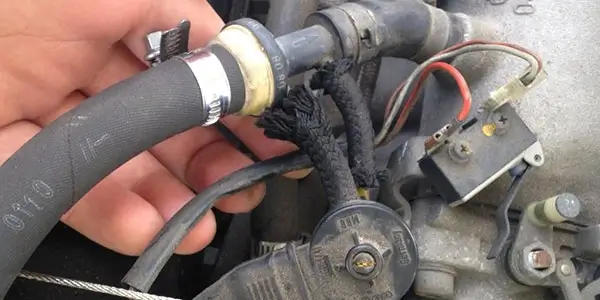
- Locate the brake boost sensor on or near the master cylinder.
- Disconnect the electrical connector.
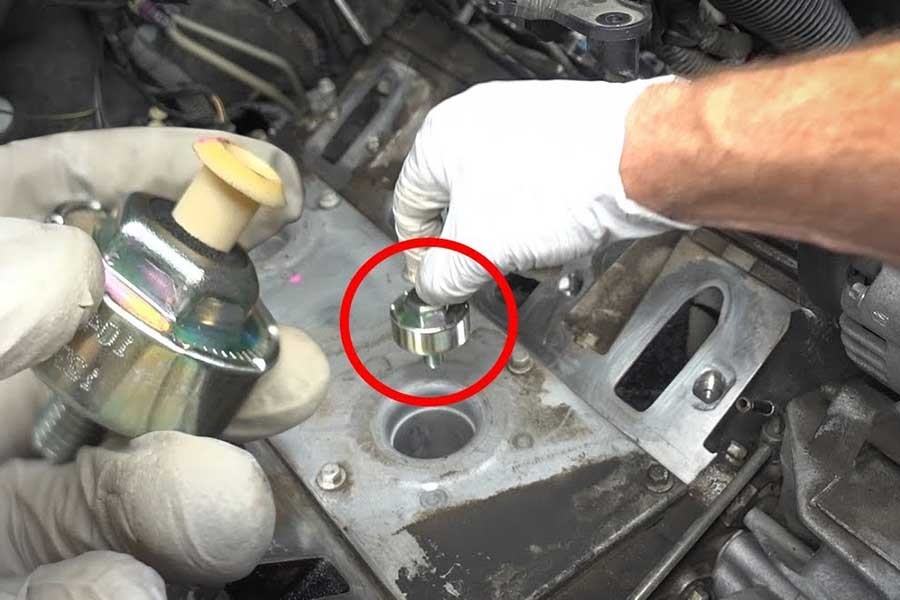
- Remove the sensor (usually a 10mm bolt or threaded fitting).
- Install the new sensor with a new sealing O-ring.
- Torque to spec (usually 10-15 ft-lbs, do not overtighten).
- Reconnect the electrical connector.
- Reconnect the battery.
- Clear codes with a scanner.
- Test drive and verify the code does not return.
Parts needed: Brake boost sensor (genuine Toyota, $80-150), O-ring (may be included with sensor).
Warning: The brake boost sensor is in contact with brake fluid. Do not allow dirt or debris to enter the master cylinder during replacement. Clean the area before removing the sensor.
Cost Breakdown
| Service | DIY Cost | Shop Cost (US avg) | Time |
|---|---|---|---|
| OBD2 code scan | $25-40 (scanner) | Free at parts stores | 5-15 min |
| Brake boost sensor replacement | $80-150 (part) | $200-400 | 30-60 min |
| Wiring repair | $10-30 (parts) | $80-150 | 30-60 min |
| Brake fluid top-up | $6 (fluid) | $20-40 | 5 min |
| Full brake system diagnosis | – | $80-150 | 30-60 min |
Frequently Asked Questions
Q: What does the C1201 brake boost sensor code mean?
A: When C1201 appears alone (without engine codes), it means the brake booster pressure sensor is not reading within the expected range. The sensor, located in the brake master cylinder, measures brake fluid pressure to assist the brake booster. If the sensor fails, the brake system may have reduced assist and the stability control system may be disabled.
Q: How is C1201 brake boost sensor different from C1201 engine control malfunction?
A: Toyota uses C1201 for two different meanings. When it appears with engine codes (P0455, P0441), it means the engine fault disabled traction control. When it appears alone with brake symptoms, it means the brake boost sensor has a fault. Scan all codes to determine which context applies. If P-codes are present, fix the engine code first.
Q: How much does it cost to replace a brake boost sensor?
A: The sensor costs $80-150 for the part. At a shop, the total cost including labor is $200-400. The job takes 30-60 minutes. Always use a genuine Toyota sensor, as aftermarket sensors may not read correctly.
Q: Can I drive with a C1201 brake boost sensor code?
A: You can drive carefully, but braking may require more pedal effort because the brake booster may not function at full capacity. The stability control system is likely disabled. Have it diagnosed within a few days. If the brake pedal feels significantly harder than normal or the brake warning light is on, have it towed to a shop.
Q: Where is the brake boost sensor located?
A: The brake boost sensor is located on or near the brake master cylinder, under the hood near the firewall on the driver’s side. It is a small sensor with an electrical connector, usually held in place with a 10mm bolt or threaded fitting. It is in contact with brake fluid, so be careful not to introduce dirt during replacement.
Q: Can a low battery cause the C1201 code?
A: Yes, indirectly. A weak battery causes low voltage, which can cause sensors to report erroneous readings and trigger random codes. If you are seeing multiple unrelated codes or the lights flicker during startup, test the battery first. A healthy battery reads 12.6V at rest and does not drop below 9.6V during cranking.
Sources & References
- Toyota Service Information – Brake boost sensor diagnostic procedures
- SAE J2012 – OBD-II Diagnostic Trouble Code definitions (C1201)
- NHTSA – Vehicle complaint database for Toyota (nhtsa.gov)
- RepairPal – Average repair cost estimates for brake boost sensor replacement
Related articles on CarsDailyHub:
– OBD Codes & Diagnostics: How to Read and Fix Any OBD Error Code
– Toyota C1201 Code: Causes, Symptoms & How to Fix It
– Trac Off & Check Engine Light on Toyota Tacoma: Causes, Codes & Fix
– How to Fix Check VSC System on Toyota Camry
– Toyota Dashboard Warning Lights: What Every Symbol Means