How to Test a Fuel Pressure Regulator: Step-by-Step

By the CarsDailyHub Editorial Team | Automotive writers; every guide fact-checked against OEM service procedures | Updated June 2026
Quick Answer: To test a fuel pressure regulator (FPR), connect a fuel pressure gauge to the fuel rail and compare the reading to your vehicle’s spec at idle. On a vacuum-operated FPR, the pressure should rise when you disconnect the vacuum line and drop when vacuum is applied. Then check that vacuum line for fuel, if fuel is present, the regulator’s diaphragm has failed. Also watch for pressure that does not hold after shutoff, which points to the FPR or another fuel-system leak.
This guide explains how to test both vacuum-operated and returnless-style fuel pressure regulators. Always follow your vehicle’s service procedure and observe fuel-safety precautions. Last reviewed: June 2026.
Table of Contents
- What the Fuel Pressure Regulator Does
- Symptoms of a Bad FPR
- What You’ll Need
- Test 1: Fuel Pressure Gauge
- Test 2: The Vacuum Test
- Test 3: Check the Vacuum Line for Fuel
- Interpreting the Results
- Frequently Asked Questions
- Sources & References
What the Fuel Pressure Regulator Does
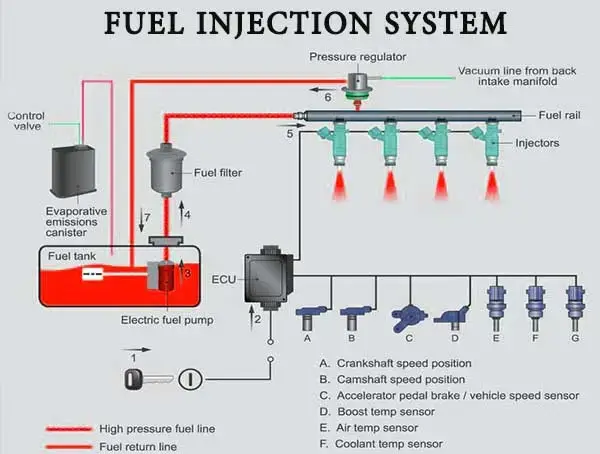
The fuel pressure regulator keeps fuel pressure at the level the engine needs by controlling how much fuel returns to the tank (or, on returnless systems, by working with the pump and a sensor). On many port-injected engines it is a vacuum-referenced device: as engine vacuum changes with load, the regulator adjusts rail pressure so the injectors deliver the right amount of fuel.
When the FPR fails, fuel pressure ends up too high or too low, and the engine runs rich or lean, which is why a bad regulator can feel like all sorts of other problems.
Symptoms of a Bad FPR
| Symptom | Why it happens |
|---|---|
| Hard starting | Pressure bleeds off, or runs too low/high at start |
| Rich running / black smoke | Pressure too high, too much fuel |
| Lean running / hesitation | Pressure too low, too little fuel |
| Poor fuel economy | Over-fueling from high pressure |
| Fuel smell | Fuel leaking past a failed diaphragm into the vacuum line |
| Rough idle or misfire | Incorrect fuel delivery |
| Fuel in the vacuum hose | The diaphragm has ruptured |
A telltale sign is the smell of fuel and a rough idle that worsens, often with fuel found in the regulator’s vacuum line.
What You’ll Need
- A fuel pressure gauge (with the correct adapter for your fuel rail test port, if equipped)
- Your vehicle’s fuel pressure specification (from service data)
- A hand vacuum pump (helpful for the vacuum test) or just the engine
- Safety glasses and rags; a fire extinguisher nearby is wise
- Eye protection and a well-ventilated area, fuel is flammable, so no sparks or smoking
Test 1: Fuel Pressure Gauge
- Relieve fuel pressure per your service procedure before connecting anything.
- Connect the fuel pressure gauge to the rail test port (or inline per your kit).
- Turn the key to ON without starting, the pump should prime and pressure should rise. Note the reading.
- Start the engine and read the pressure at idle.
- Compare both readings to the manufacturer’s spec. Too high or too low points to the regulator (or the pump, filter, or injectors, which you rule out next).
- Shut the engine off and watch whether pressure holds. A rapid drop indicates a leak, which can be the FPR, an injector, a check valve, or the pump.
Test 2: The Vacuum Test
On a vacuum-referenced FPR:
- With the engine idling and the gauge connected, note the pressure.
- Disconnect the vacuum line from the regulator. Fuel pressure should rise by a noticeable amount (commonly several psi).
- Reconnect it (or apply vacuum with a hand pump). Pressure should drop back down.
- If pressure does not change when you connect and disconnect vacuum, the regulator is not responding correctly and is likely faulty (or the vacuum source is blocked).
This responsiveness to vacuum is the core function of the regulator, so a non-response is a strong indicator of failure.
Test 3: Check the Vacuum Line for Fuel
With the engine off, remove the vacuum hose from the regulator and look and smell inside it:
- Fuel present (wet or strong gas smell): the regulator’s diaphragm has ruptured, allowing fuel into the vacuum line and the intake. This is a definite FPR failure, replace the regulator.
- Dry, no fuel: the diaphragm is intact, and any pressure problem may be elsewhere (pump, filter, injectors).
Finding raw fuel in the vacuum line is one of the clearest confirmations of a bad regulator.
Interpreting the Results
| Finding | Likely conclusion |
|---|---|
| Pressure too high, drops with vacuum applied | FPR or restricted return |
| Pressure too low at idle | Pump, filter, or FPR |
| No change when vacuum connected/disconnected | Faulty FPR (or no vacuum signal) |
| Fuel in the vacuum line | Ruptured FPR diaphragm, replace |
| Pressure won’t hold after shutoff | Leak: FPR, injector, check valve, or pump |
If the gauge and vacuum tests point to the regulator, replacing it is usually straightforward. If results are ambiguous, test the pump and injectors before condemning the FPR.
Frequently Asked Questions
Q: How do I know if my fuel pressure regulator is bad?
A: The clearest tests are a fuel pressure gauge reading that is out of spec and does not respond when you connect and disconnect the vacuum line, plus finding raw fuel inside the regulator’s vacuum hose. Symptoms like hard starting, black smoke, a strong fuel smell, poor economy, and rough idle support the diagnosis, but the gauge and vacuum-line checks confirm it.
Q: Can I test a fuel pressure regulator without a gauge?
A: You can do a partial check by removing the vacuum hose from the regulator and looking for fuel inside it, finding fuel confirms a ruptured diaphragm. But to properly judge whether pressure is too high or too low, you really need a fuel pressure gauge. Without one, you can confirm a failed diaphragm but not rule the FPR in or out for pressure problems.
Q: What happens if you drive with a bad fuel pressure regulator?
A: The engine runs rich or lean depending on the failure. Running rich wastes fuel, fouls plugs, and can damage the catalytic converter; a ruptured diaphragm can even draw raw fuel into the intake. Running lean causes hesitation and misfires. It is best to fix it promptly rather than risk converter damage or a fuel leak.
Q: Why is there gas in my fuel pressure regulator vacuum line?
A: Fuel in the vacuum line means the regulator’s internal diaphragm has ruptured, allowing fuel to pass into the vacuum hose and then into the intake manifold. This is a definite sign of a failed regulator, and it explains symptoms like a rich condition, fuel smell, and rough running. Replace the regulator.
Q: How much should fuel pressure change when I disconnect the vacuum line?
A: On a vacuum-referenced regulator, disconnecting the vacuum line at idle should raise rail pressure by a noticeable amount, often in the range of several psi, and reconnecting it should drop the pressure back. The exact figure varies by vehicle, so compare to your service specification. No change at all indicates a faulty regulator or a missing vacuum signal.
Sources & References
- Manufacturer service procedures for fuel pressure testing and FPR diagnosis
- Industry guidance on vacuum-referenced and returnless fuel systems
- Fuel-system safety best practices
- Repair information references for fuel pressure specifications
Related articles on CarsDailyHub:
– Car Problem Solver: Complete Symptom Guide
– How to Unstick a Fuel Pressure Regulator
– How to Use an OBD Scanner
– How to Fix P1101 on a Chevy Malibu