Ford Escape Dashboard Warning Lights: What Each Symbol Means

By the CarsDailyHub Editorial Team | Automotive writers; every article fact-checked against Ford’s owner’s manual and OEM service documentation | Updated June 2026
This guide covers dashboard warning symbols for the 2013-2024 Ford Escape (third and fourth generations). Specifications reference Ford’s owner’s manual and OEM service documentation. Last reviewed: June 2026.
How Ford Escape Dashboard Lights Work (Color Logic)
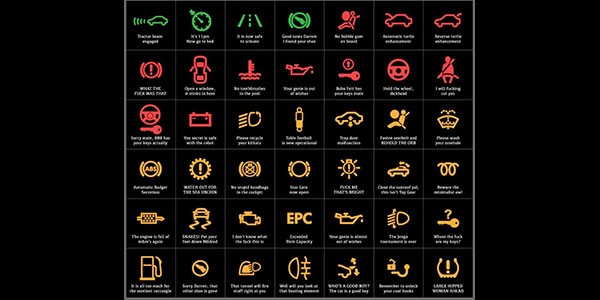
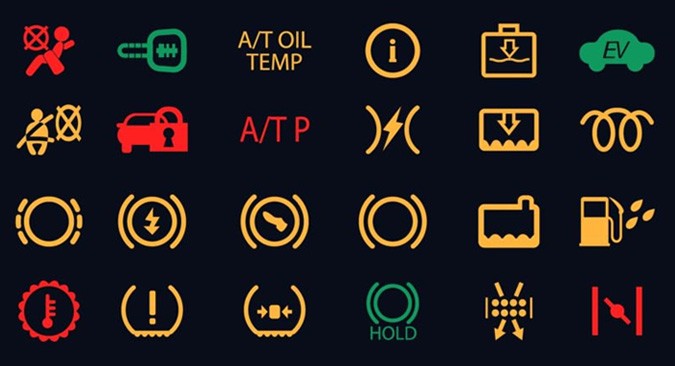
Ford uses a three-tier color system across the Escape lineup. Once you understand the logic, you can read any light without memorizing each symbol:
- Red = danger. The system is telling you something is actively failing or about to cause damage. Pull over safely and stop the engine.
- Amber/Yellow = caution. A system needs attention but the vehicle is still drivable. Schedule diagnosis within a few days, don’t ignore it for weeks.
- Green/Blue = informational. A feature is switched on (cruise, high beams, headlights). No action needed.
One nuance specific to the Escape: a flashing amber light is more urgent than a steady one. A flashing check engine light, for example, means an active engine misfire that can melt the catalytic converter in minutes, that’s a pull-over-now situation even though the color is amber.
Mechanics typically see Escape owners ignore the amber wrench light for weeks because “the car still drives fine.” By the time it goes red, the underlying throttle-body or powertrain issue has often escalated a $200 repair into an $800 one. Amber means soon, not never.
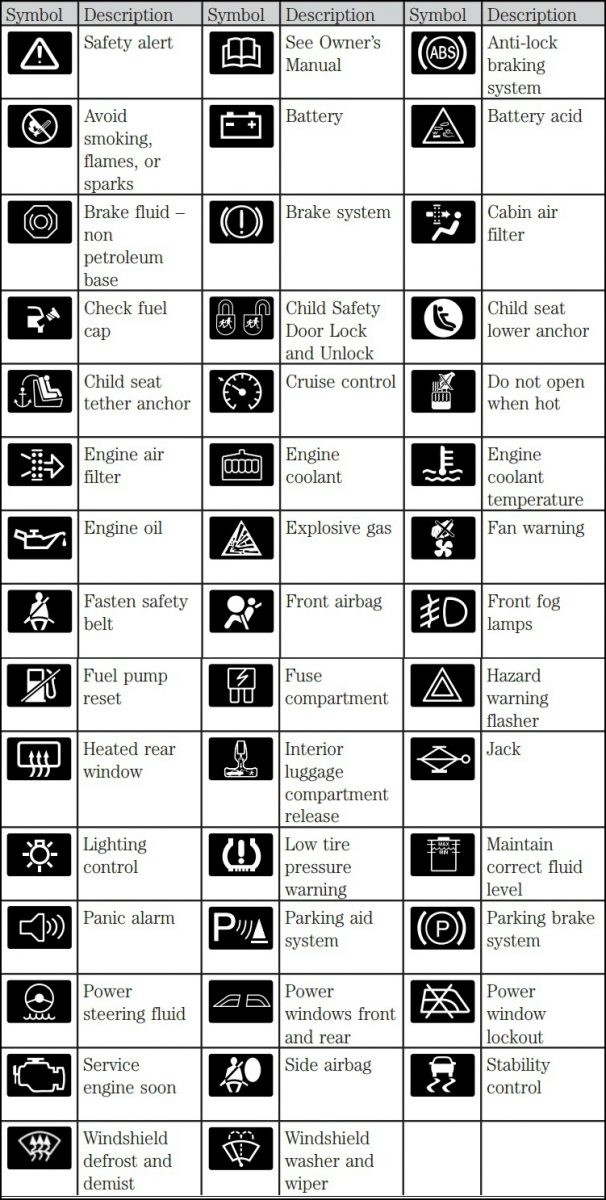
Complete Ford Escape Warning Light Table
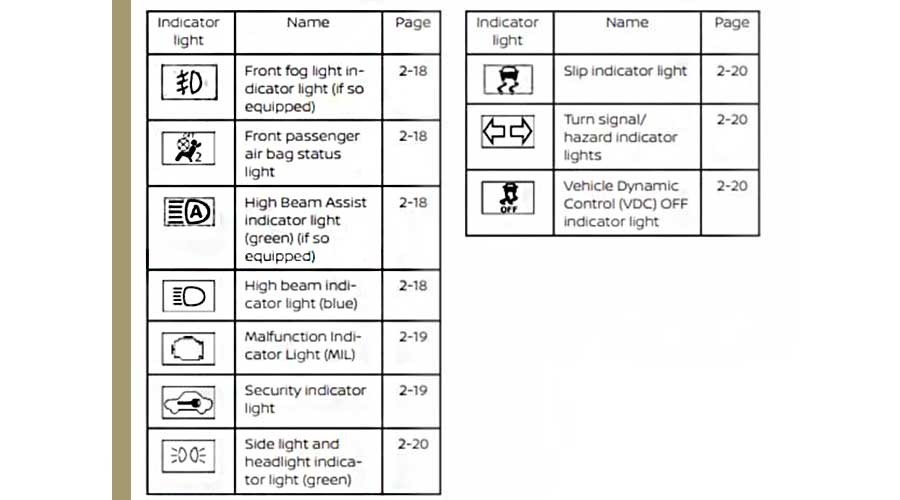
| Symbol | Name | Color | Severity | What It Means | Action |
|---|---|---|---|---|---|
| Engine thermometer | Engine Coolant Temp | Red | 🔴 Stop now | Engine is overheating | Pull over, stop engine, let cool 20+ min |
| Oil can | Engine Oil Pressure | Red | 🔴 Stop now | Low oil pressure, engine damage imminent | Stop, check oil level, do not restart if low |
| (!) in circle | Brake System | Red | 🔴 Stop now | Parking brake on, low brake fluid, or brake fault | Release parking brake; if still on, check fluid, tow if needed |
| Battery | Charging System | Red | 🔴 Stop now | Alternator/belt failure, battery draining | Turn off all electrics, drive to nearest shop immediately |
| Engine icon | Check Engine (MIL) | Amber | 🟡 Diagnose soon | Emissions/powertrain fault | Tighten gas cap first; if persists, scan codes |
| Engine icon (flashing) | Check Engine, Misfire | Amber flashing | 🔴 Stop now | Active misfire, catalytic converter at risk | Reduce speed, low load, get to shop now |
| Wrench | Powertrain/Throttle | Amber | 🟡 Diagnose soon | Throttle body or powertrain control issue | Often enters limp mode; diagnose within days |
| ABS in circle | Anti-Lock Brakes | Amber | 🟡 Diagnose soon | ABS disabled, base brakes still work | Safe to drive carefully; schedule diagnosis |
| Tire with ! | Tire Pressure (TPMS) | Amber | 🟡 Check soon | One or more tires low on air | Check all tire pressures at next stop |
| Airbag icon | Airbag/Supplemental Restraint | Amber | 🟡 Diagnose soon | Airbag system fault, may not deploy in crash | Do not ignore; schedule dealer diagnosis |
| Fuel pump | Low Fuel | Amber | 🟡 Refuel soon | Less than ~50 miles of range | Refuel within 50 miles |
| Door ajar | Door Open | Red | 🔴 Stop & check | A door isn’t fully latched | Stop, close all doors |
| Seatbelt | Seatbelt Reminder | Red | 🔴 Buckle up | Driver/passenger unbuckled | Fasten seatbelt |
| Speedometer | Cruise Control | Green | ℹ️ Info | Cruise is active | Normal, no action |
| Headlight icon | High Beams | Blue | ℹ️ Info | High beams on | Dim for oncoming traffic |
| Arrow | Turn Signal | Green | ℹ️ Info | Signal active | Normal |
| A in circle | Auto Start-Stop | Green | ℹ️ Info | Engine auto-stop active at idle | Normal on 2017+ models |
| Car between lanes | Lane Keeping | Green | ℹ️ Info | Lane-keep assist active | Normal on equipped models |
| S-curve | Stability Control (ESC) | Green/Amber | ℹ️/🟡 | Green = active; Amber = wheel slip detected | Normal; if stays amber, have it checked |
Red Warning Lights, Stop Driving Immediately
Engine Coolant Temperature
When this red thermometer illuminates, your engine is above its safe operating temperature, typically above 118°C (244°F). Continuing to drive even a few miles can warp the cylinder head and blow the head gasket.
What to do:
- Pull over to a safe location and shut the engine off.
- Do not open the radiator cap while hot, pressurized coolant can cause severe burns. Wait at least 20-30 minutes.
- Once cool, check the coolant reservoir level. If low, top up with the correct Ford-specified coolant (Motorcraft Gold or equivalent, depending on model year, check your owner’s manual).
- Look underneath for leaks. A puddle of orange/green fluid means a coolant leak.
- If the light returns after topping up, do not drive, call a tow. The water pump or thermostat may have failed.
Engine Oil Pressure
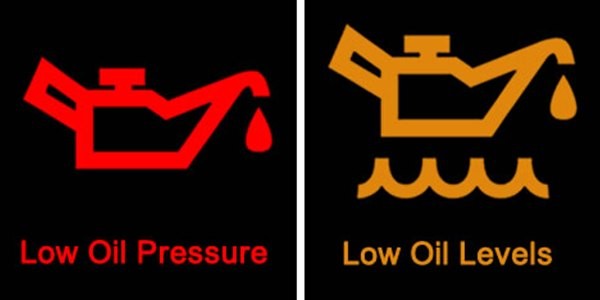
The red oil can means oil pressure has dropped below the safe threshold (typically under ~7 psi at idle). This is not a “low oil level” reminder, it’s a “your engine is about to destroy itself” warning.
What to do:
- Pull over and stop the engine immediately.
- Wait 5 minutes for oil to drain into the pan, then check the dipstick.
- If oil is below the MIN mark, add the correct viscosity (most 2013+ Escapes use 5W-30 or 0W-20, check the oil filler cap or manual).
- If the dipstick reads normal but the light stays on, do not restart. Low pressure with a full sump means a failing oil pump or blocked pickup, driving will spin a bearing in minutes.
- Tow to a shop.
Brake System
The red (!) circle means one of three things: the parking brake is engaged, brake fluid is low, or there’s a brake-system fault.
What to do:
- Confirm the parking brake is fully released.
- If the light stays on, check the brake fluid reservoir under the hood.
- If fluid is at the MIN line or below, top up with DOT 4 brake fluid (verify spec in your manual, some years specify DOT 3).
- A sudden large fluid drop means a leak in the system, the brake pedal may feel soft. Do not drive. Tow it.
- If fluid is normal and the pedal feels firm, the brake switch or sensor may be faulty, drive carefully to a shop.
Charging System / Battery
The red battery icon means the alternator has stopped charging. The vehicle is now running on battery alone and will stall once the battery drains, anywhere from 5 to 30 minutes depending on electrical load.
What to do:
- Turn off everything non-essential: climate control, heated seats, radio, phone chargers.
- Drive directly to the nearest repair shop, do not make stops.
- Common causes on the Escape: worn serpentine belt, failed alternator, corroded battery terminals. A belt snap is the most common and is often audible.
Amber/Yellow Warning Lights, Diagnose Soon
Check Engine Light (MIL)
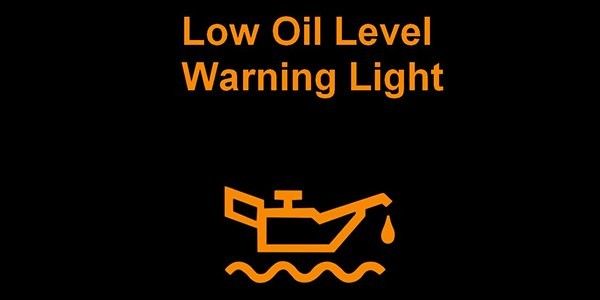
The amber engine icon is the most common and most misunderstood light. It can mean something as trivial as a loose fuel cap or as serious as a failing catalytic converter.
First step, always: Tighten the fuel cap until it clicks at least once. A loose cap is the single most common cause of an Escape check engine light, and it takes 10 seconds to rule out. Drive for a day; if the light clears, you’re done.
If it stays on, you need the diagnostic trouble codes (DTCs) read. Any auto parts store in the US will read them for free, or a $25-40 OBD2 scanner pays for itself on the second use. The code tells you the system at fault, never replace parts guessing.
A flashing check engine light is different and urgent: it means an active engine misfire. Unburned fuel is entering the exhaust and can overheat the catalytic converter, melting its internal honeycomb. Reduce speed immediately, minimize load, and get to a shop the same day.
Wrench / Powertrain Light
The wrench icon on the Escape points to the electronic throttle body or the powertrain control module. The vehicle often drops into “limp mode”, reduced power, limited RPM, restricted speed, to protect itself.
This is a known weak point on 2013-2016 Escapes specifically. Ford issued technical service bulletins covering throttle-body cleaning and, in some cases, replacement under extended warranty. If your Escape is in that range and you see the wrench light, mention the TSB to your service advisor, some owners report coverage even outside the standard warranty period.
ABS Warning Light
When the amber ABS light illuminates, the anti-lock braking system is disabled. Your base brakes still work, you can stop normally. What you lose is the anti-lock function in a panic stop, so wheels may lock up under hard braking.
Most ABS faults on the Escape trace to wheel-speed sensors or their wiring, both of which sit exposed near the wheels and corrode over time. Diagnosis is straightforward with a scanner. Safe to drive carefully to a shop.
Tire Pressure (TPMS)
The horseshoe-with-exclamation icon means one or more tires has dropped below the pressure threshold (typically 25-30% below the placard pressure on the driver’s door jamb, usually around 30-32 psi cold for the Escape).
Check all four tires with a gauge at the next safe stop. The TPMS doesn’t tell you which tire, and a slow leak can become a flat. If pressures look fine but the light persists, the system may need a TPMS reset, on most Escapes this is done via the dashboard menu or by driving above 20 mph for a few minutes after inflating.
Green & Blue Indicator Lights (Informational)
These lights confirm a feature is active. They are not warnings:
- Green cruise control icon, cruise is engaged and holding speed.
- Blue headlight icon, high beams are on. Switch to low for oncoming traffic.
- Green flashing arrows, turn signal active.
- Green “A” in a circle, Auto Start-Stop is active (2017+ models). The engine shuts off at idle stops to save fuel and restarts when you lift off the brake.
- Green car between lane lines, Lane Keeping System is active and monitoring lane position.
- Green S-curve icon, Stability Control (ESC) is active. If it flashes amber, the system is actively intervening to prevent a skid, that’s normal on slippery roads.
If any of these stay illuminated when the feature is off, a switch or sensor may be stuck, worth mentioning at your next service, but not urgent.
Ford Escape-Specific Lights You Should Know
A few symbols are either unique to the Escape or behave differently than on other Fords:
Wrench + Check Engine together, On 2013-2019 Escapes, seeing both the wrench and check engine light simultaneously often points to the throttle body. This is the single most documented Escape-specific issue across owner forums and NHTSA complaints. If you see this combination, the throttle body is the first component to inspect.
4WD/AWD indicator, On AWD-equipped Escapes, a small “AWD” or four-wheel icon illuminates briefly at startup. If it stays on or flashes, the rear differential or PTU (power transfer unit) may be overheating or faulty. The PTU is a known service item on AWD Escapes, check the fluid level at every oil change.
Auto Start-Stop with slash, If the green “A” icon has a slash through it, Auto Start-Stop has been disabled (either by you via the dashboard button, or automatically because the battery charge is low, climate demand is high, or the engine is cold). This is normal behavior, not a fault.
MyKey indicator, A small key icon appears when MyKey is active, meaning a restricted driving profile is enabled (usually set by parents for teen drivers). It limits top speed and audio volume. Not a fault, press the OK button on the steering wheel to see which restrictions are active.
What to Do When a Light Comes On (Decision Flow)
Use this sequence every time a new light appears:
- Is it red? Pull over safely within the next minute. Stop the engine. Check fluid levels once cool. Do not drive if a red light returns after topping up.
- Is it amber and flashing? Reduce speed and load immediately. Drive to the nearest shop, not home, not work, the shop. A flashing amber is treated like a red.
- Is it amber and steady? Note the symbol. Tighten the gas cap if it’s the check engine light. Schedule diagnosis within the week. The vehicle is drivable but the issue won’t self-resolve.
- Is it green or blue? No action. It’s informational. Confirm the feature is one you intended to switch on.
The one mistake mechanics see most often: ignoring an amber light because the car “feels fine.” The Escape’s throttle-body issue, in particular, starts as an intermittent amber wrench light that goes away on restart. Owners drive for months with occasional warnings until the throttle body fails completely and the car enters limp mode on a highway. The amber light is your cheap early warning, use it.
How Much It Costs to Diagnose Dashboard Lights
| Service | DIY Cost | Shop Cost (US avg) | Time |
|---|---|---|---|
| OBD2 code scan | $25-40 (scanner) | Free at auto parts stores; $80-150 at shop | 5-15 min |
| Gas cap replacement | $12-25 | $25-60 parts + labor | 2 min |
| Throttle body cleaning | $8 (cleaner) | $80-150 | 30-60 min |
| Throttle body replacement | $120-200 (part) | $280-480 parts + labor | 1-1.5 hrs |
| Wheel speed sensor replacement | $25-60 (part) | $120-220 parts + labor | 30-45 min |
| Coolant leak diagnosis | – | $80-150 diag | 30-60 min |
| Oil pressure diagnosis | – | $80-150 diag | 30-90 min |
| Brake fluid top-up | $6 (fluid) | $20-40 | 5 min |
Cost ranges are US averages compiled from RepairPal and owner-reported data. Actual costs vary by region, model year, and shop type (dealer vs independent).
When to call a mechanic instead of DIY:
- Any red light that returns after you’ve topped up the relevant fluid
- A flashing check engine light (active misfire)
- Any brake-system fault you can’t trace to the parking brake
- Anything involving the airbag or supplemental restraint system, never DIY airbag work
Frequently Asked Questions
Q: Why did my Ford Escape check engine light come on after getting gas?
A: The most common cause is a loose or faulty fuel cap. The evaporative emissions system monitors for vapor leaks, and a cap that isn’t clicked tight triggers a P0455 or P0441 code. Tighten the cap until it clicks, drive for a day, and the light usually clears. If it doesn’t, have the codes read, the purge valve or charcoal canister may be the actual culprit.
Q: Can I keep driving with the wrench light on?
A: You can, but with reduced power. The wrench light typically puts the Escape into limp mode, limited throttle response and restricted speed. It’s safe to drive to a shop, but don’t put it off. On 2013-2016 models this is almost always the throttle body, and Ford issued service bulletins for it. The longer you drive with it, the more likely it fails completely and strands you.
Q: The ABS light is on but my brakes feel fine, is that safe?
A: Your base brakes still work normally, so stopping distance is unaffected in normal driving. What you lose is anti-lock protection in a panic stop, wheels may lock and the vehicle can skid. It’s safe to drive carefully to a shop, but get it diagnosed. The most common cause on the Escape is a corroded wheel-speed sensor, a $120-220 repair.
Q: What does the red oil light mean versus the amber “maintenance required” reminder?
A: They are completely different. The red oil can means low oil pressure, stop the engine immediately or risk catastrophic damage. The amber “Maintenance Required” or oil-life reminder is a scheduled-service reminder based on mileage and time; it means an oil change is due, not that pressure is low. Never confuse the two, the red one is an emergency, the amber one is a calendar reminder.
Q: My Escape’s temperature gauge is normal but the red coolant light came on, why?
A: The warning light triggers at a higher threshold than the gauge’s red zone, and the sensor can react faster than the mechanical gauge moves. If the light is on, treat it as real even if the gauge looks normal, the sensor or the gauge may be the faulty component, but you cannot safely assume the engine isn’t overheating. Pull over, let it cool, and have it diagnosed.
Q: How do I reset the tire pressure light on a Ford Escape?
A: After inflating all tires to the pressure listed on the driver’s door jamb placard (usually 30-32 psi cold), drive above 20 mph for 2-3 minutes. The TPMS relearns the pressures and the light clears. On some model years you can also trigger a reset via the dashboard menu under Settings > Driver Assist > Tire Pressure. If it doesn’t clear, a sensor may be dead, battery life in TPMS sensors is 5-7 years.
Q: Does the Ford Escape have a known problem with dashboard warning lights?
A: The 2013-2016 Escape has a well-documented throttle-body issue that triggers the wrench and check engine lights together. Ford issued TSBs and, in some cases, extended coverage. The AWD PTU (power transfer unit) is another known service item, if you see an AWD warning, have the PTU fluid checked. Neither is a reason to avoid the Escape, but both are worth knowing about before a light surprises you.
Sources & References
- Ford Motor Company, 2013-2024 Ford Escape Owner’s Manuals (model-year specific; available at owner.ford.com)
- Ford Motor Company, Technical Service Bulletins covering electronic throttle body (2013-2016 Escape)
- NHTSA, Vehicle complaint database for Ford Escape by model year (nhtsa.gov)
- RepairPal, Average repair cost estimates for Ford Escape by repair type
- OBD-II code definitions, P0455, P0441, C1201 per SAE J2012 standard
Related articles on CarsDailyHub: