Ford Dashboard Symbols and Meanings: The Complete Guide

By the CarsDailyHub Editorial Team | Automotive writers; every article fact-checked against Ford’s owner’s manual and OEM service documentation | Updated June 2026
Quick Answer: Across the Ford range, the lights that mean stop driving now are the red engine coolant temperature light, the red oil pressure light, the red battery (charging) light, and the red brake warning light. The amber wrench is Ford’s powertrain malfunction light and usually signals reduced-power limp mode. A flashing check engine light is an active misfire, treat it like a red light and get to a shop the same day.
This guide explains the dashboard symbols used across modern Ford vehicles (F-150, Escape, Edge, Explorer, Focus, Fusion, Mustang, Ranger, and more). Specific symbols can vary by model and year, so confirm against your owner’s manual. Last reviewed: June 2026.
Table of Contents
- How Ford Dashboard Lights Work (Color Logic)
- Complete Ford Warning Light Table
- Red Warning Lights, Stop Driving Immediately
- Amber/Yellow Warning Lights, Diagnose Soon
- The Ford Wrench Light Explained
- Ford-Specific Symbols (MyKey, Start-Stop, Hill Start)
- Green & Blue Indicator Lights (Informational)
- What to Do When a Light Comes On (Decision Flow)
- Frequently Asked Questions
- Sources & References
How Ford Dashboard Lights Work (Color Logic)
Ford uses the universal three-tier colour system across its lineup:
- Red = danger. A system is failing or about to cause damage. Pull over safely and stop the engine.
- Amber/Yellow = caution. The vehicle is still drivable but needs attention soon.
- Green/Blue = informational. A feature is switched on, such as headlights, cruise, or auto start-stop. No action needed.
The symbol that sets Ford apart is the amber wrench. On most brands a wrench means “service due,” but on a Ford it is the powertrain malfunction light and usually means the vehicle has entered reduced-power limp mode. It gets its own section below because it is the most-searched Ford warning light.
A flashing check engine light, on any Ford, means an active misfire that can destroy the catalytic converter in minutes. Treat it like a red light.
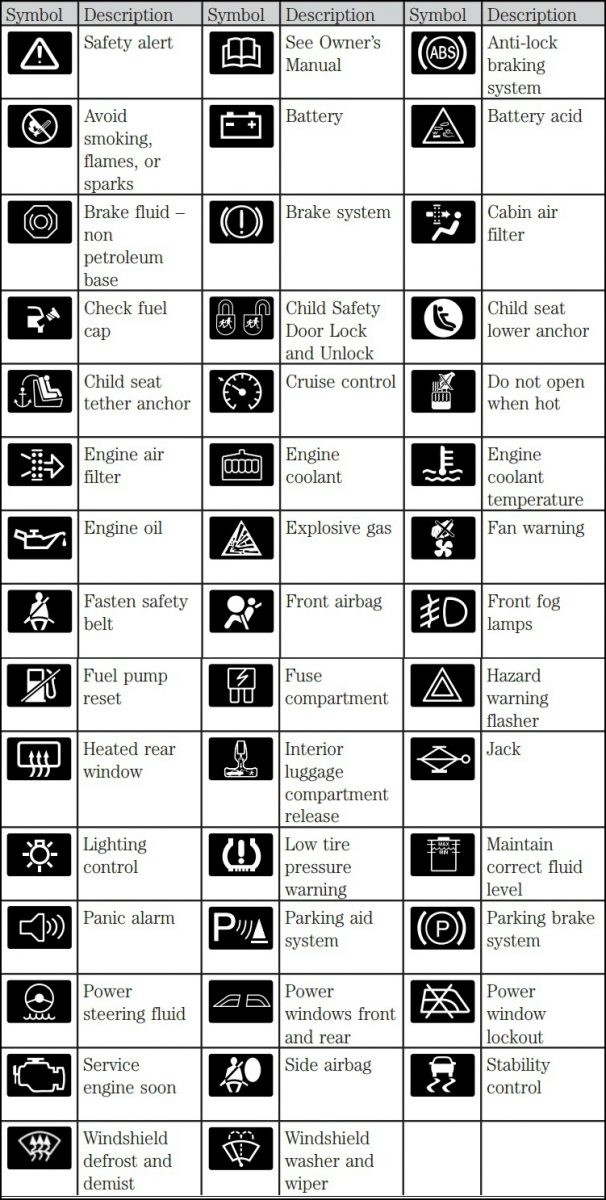
Complete Ford Warning Light Table
| Symbol | Name | Color | Severity | What It Means | Action |
|---|---|---|---|---|---|
| Thermometer in liquid | Engine Coolant Temp | Red | Stop now | Engine overheating | Pull over, stop, let cool 20+ min |
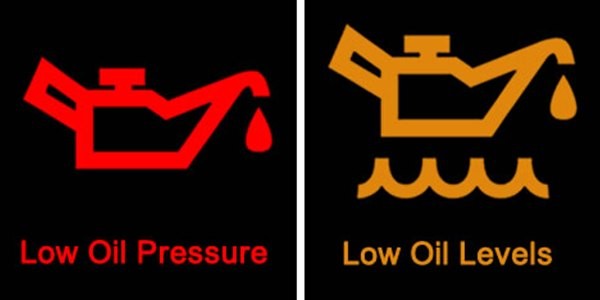
| Oil can with drip | Oil Pressure | Red | Stop now | Low oil pressure | Stop, check oil, do not restart if low |
| Battery | Charging System | Red | Stop now | Alternator not charging | Reduce load, drive to shop now |
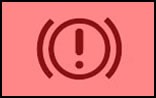
| (!) in circle / BRAKE | Brake System | Red | Stop now | Parking brake, low fluid, or fault | Release brake; check fluid; tow if needed |
| Wrench | Powertrain Malfunction | Amber | Diagnose soon | Engine/transmission fault, limp mode | Reduce power, drive to shop, scan codes |
| Engine outline | Check Engine (MIL) | Amber | Diagnose soon | Emissions/powertrain fault | Tighten gas cap first; scan if it stays on |
| Engine outline flashing | Active Misfire | Amber flashing | Stop now | Misfire damaging catalytic converter | Reduce speed and load, shop today |
| Sliding car with lines | AdvanceTrac / Stability | Amber | Diagnose soon | Stability/traction fault or active | Steady = scan; brief flash = normal |
| Sliding car with OFF | Traction Control Off | Amber | Info | Traction control switched off | Re-enable for normal driving |
| ABS in circle | Anti-Lock Brakes | Amber | Diagnose soon | ABS disabled, base brakes work | Drive carefully, get it checked |
| Tire with (!) | Tire Pressure (TPMS) | Amber | Check soon | One or more tires low | Inflate to door-jamb spec |
| Person with airbag | SRS Airbag | Amber | Diagnose soon | Airbag fault | Get it diagnosed |
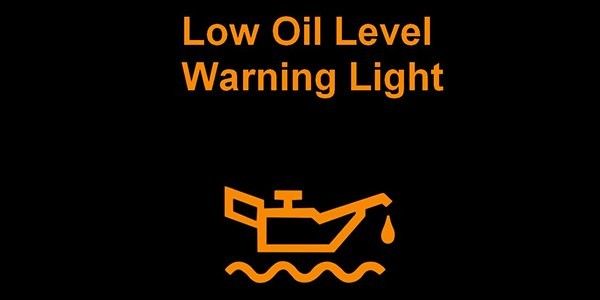
| Oil can / “Oil Change” msg | Oil Change Due | Amber | Service soon | Oil-life monitor reached limit | Change oil and reset monitor |
| Steering wheel with (!) | Power Steering | Amber | Diagnose soon | Power steering fault | Steering may go heavy; diagnose soon |
| AWD / 4×4 | All/Four-Wheel Drive | Amber | Diagnose soon | Driveline fault (e.g. PTU) | Have the system checked |
| Key / MyKey | MyKey | Amber/Green | Info | A restricted MyKey is in use | Use admin key to change settings |
| Fuel pump | Low Fuel | Amber | Refuel soon | Low fuel level | Refuel soon |
| Headlight beams | Low Beam | Green | Info | Headlights on | Normal |
| Headlight with lines | High Beams | Blue | Info | High beams on | Dim for oncoming traffic |
| A with circular arrow | Auto Start-Stop | Green/Amber | Info | Engine auto-stop at idle | Normal; slash = temporarily off |
Red Warning Lights, Stop Driving Immediately
Engine Coolant Temperature
The red thermometer means the engine is overheating. Pull over, switch off, and wait 20 to 30 minutes before opening any coolant cap. Top up with the correct Motorcraft coolant if low. If the light returns after topping up, the water pump or thermostat may have failed, tow it. On EcoBoost engines, take overheating especially seriously.
Oil Pressure
The red oil can means low oil pressure, which is different from the “Oil Change Due” message. Stop the engine, wait five minutes, and check the dipstick. Top up to the correct grade if low. If the level is normal but the light stays on, do not restart.
Charging System
The red battery means the alternator is no longer charging. Switch off the AC, heated seats, and audio, and drive straight to a shop before the battery drains.
Brake System (Red)
Release the parking brake first, then check the brake fluid. A soft or sinking pedal with the red brake light means a hydraulic leak, do not drive, tow it.
Amber/Yellow Warning Lights, Diagnose Soon
Check Engine Light
The amber engine outline covers emissions and powertrain faults. The cheapest common cause is a loose fuel cap, so tighten it and drive for a day. If it stays on, scan the codes. A flashing light is an active misfire, reduce load and get to a shop the same day.
AdvanceTrac and ABS
AdvanceTrac is Ford’s stability system. A steady AdvanceTrac (sliding car) light points to a stability fault, often a wheel-speed sensor shared with the ABS. The amber ABS light means anti-lock braking is off while your normal brakes still work. A brief flash of the sliding-car light during slippery driving is normal, the system is working.
AWD / Driveline
On AWD Fords like the Edge and Explorer, an AWD warning often points to the Power Transfer Unit (PTU) or rear driveline. Because the PTU often has no factory service interval, neglected fluid is a common cause, have it checked promptly.
Oil Change Due vs Oil Pressure
This is the most common Ford mix-up. The “Oil Change Required” or “Oil Life 0%” message is a mileage and condition reminder, change the oil and reset the monitor. Only the red oil-can light means actual low pressure, which is an emergency.
The Ford Wrench Light Explained
The amber wrench is Ford’s powertrain malfunction / reduced power indicator. When it comes on, the engine or transmission control system has detected a fault and usually limits power to protect the drivetrain. You will notice sluggish acceleration and a capped speed, this is limp mode.
Common triggers across the Ford range include a faulty or dirty throttle body, boost or turbo issues on EcoBoost engines, transmission solenoid faults, throttle or accelerator pedal sensor problems, and sometimes a weak 12V battery causing low-voltage glitches. The vehicle is normally drivable to a shop, but do not ignore it, and always scan the codes so you fix the real cause instead of guessing. On several models (such as the Escape and Focus), the throttle body is a frequent culprit and is covered by Ford service bulletins.
Ford-Specific Symbols (MyKey, Start-Stop, Hill Start)
MyKey. Ford’s MyKey lets an owner program a key with restrictions (speed limit, audio volume cap, mandatory seatbelt chimes), often for teen drivers. A MyKey indicator or message simply means a restricted key is in use. Use the administrator key to change or clear the settings.
Auto Start-Stop. The “A” with a circular arrow shows the engine will shut off at idle to save fuel. A slash through it means the system has temporarily disabled itself, common when the battery is cold or the AC is working hard, which is normal.
Hill Start Assist. Holds the brakes briefly on an incline as you move from brake to throttle. A related message usually points to a sensor or brake input issue rather than a failure, but have it scanned if it persists.
Battery saver / deep sleep. Some Fords show a “Battery Saver Mode” message and shut off accessories to protect the 12V battery, often after the car sat with something left on. Drive to recharge, and test the battery if it recurs.
Green & Blue Indicator Lights (Informational)
- Green headlight icon: low beams on.
- Blue headlight icon: high beams on. Dim for oncoming traffic.
- Green arrows: turn signal or hazards (fast blink means a bulb is out).
- Green cruise / SET: cruise control active.
- Green car with lane lines: Lane Keeping System active.
What to Do When a Light Comes On (Decision Flow)
- Is it red? Pull over within the next minute and stop the engine. Check the relevant fluid once cool. Do not drive if a red light returns after topping up.
- Is it the wrench? The vehicle is likely in limp mode. Drive gently to a shop and scan the codes.
- Is it the check engine light and flashing? Active misfire, get to a shop today.
- Is it amber and steady (ABS, AdvanceTrac, TPMS, airbag)? Note it and schedule diagnosis within the week.
- Is it an “Oil Change Due” message? Routine, change the oil and reset the monitor. It is not the red oil-pressure warning.
- Is it green or blue? No action.
Frequently Asked Questions
Q: What does the wrench light mean on a Ford?
A: The wrench is Ford’s powertrain malfunction light, not a service reminder. It means the engine or transmission control system found a fault and usually limited power, so the vehicle is in reduced-power limp mode. Common causes are the throttle body, a boost or turbo issue on EcoBoost engines, or a transmission solenoid. Drive gently to a shop and have the codes read.
Q: Is “Service Engine Soon” the same as the check engine light on a Ford?
A: On most Fords the emissions warning is shown as the engine-outline check engine light, while “Service Engine Soon” or “Powertrain Malfunction / Reduced Power” messages may appear as text. Functionally, any of these means the powertrain control system wants attention. Scan the codes to find the exact fault, and treat a flashing check engine light as urgent.
Q: My Ford says “Oil Change Required” but the oil is fine. Is something wrong?
A: No. The “Oil Change Required” or “Oil Life 0%” message is a mileage and condition-based reminder, completely separate from the red oil-pressure light. Change the oil and reset the oil-life monitor in the message center. Only the red oil-can symbol indicates a real low-pressure problem.
Q: What does the AWD warning light mean on a Ford Edge or Explorer?
A: It usually points to the all-wheel-drive driveline, often the Power Transfer Unit (PTU), which frequently has no factory service interval and runs on old fluid. Have the PTU fluid and the AWD system checked promptly, ignoring it can lead to expensive driveline damage.
Q: Can I drive my Ford with the AdvanceTrac light on?
A: If it flashes only briefly during slippery driving, that is normal stability-control activity. If it stays on steadily, the stability system has a fault, commonly a wheel-speed sensor, and may be disabled. Your normal brakes still work, so drive carefully and have it scanned soon.
Q: Why is there a slash through the Auto Start-Stop “A” on my Ford?
A: A slash means Auto Start-Stop has temporarily disabled itself. This is normal and happens when the 12V battery charge is low, the engine is cold, or the AC is working hard to cool or heat the cabin. It is not a fault. If stop-start never works, have the battery tested.
Sources & References
- Ford Motor Company owner’s manuals across the current lineup (owner.ford.com)
- Ford Technical Service Bulletins covering powertrain malfunction, throttle body, and AWD systems
- NHTSA recall and complaint database for Ford vehicles (nhtsa.gov)
- RepairPal average repair cost estimates for Ford models
- OBD-II code definitions per SAE J2012
Related articles on CarsDailyHub:
– Complete Guide to All Car Dashboard Warning Lights
– Ford Escape Dashboard Warning Lights
– Ford Edge Dashboard Symbols and Meanings
– 2010 Ford Escape Dash Lights and What They Mean
– How to Use an OBD2 Scanner