P0332 Code on a Chevy Silverado: Causes, Symptoms, and Fix

By the CarsDailyHub Editorial Team | Automotive writers; every article fact-checked against OEM service documentation and OBD-II standards | Updated June 2026
Quick Answer: P0332 on a Chevy Silverado means “Knock Sensor 2 Circuit Low Input (Bank 2).” On GM V8 trucks the knock sensors sit in the valley under the intake manifold, and the most common cause is a failed sensor or a corroded sensor harness, water and debris collect in the valley and ruin the connectors. The fix is usually replacing both knock sensors and the harness, which requires removing the intake manifold. Expect to lose some throttle response or fuel economy until it is fixed.
This guide covers P0332 on GM/Chevrolet V8 trucks (4.8L, 5.3L, 6.0L) including the Silverado. Last reviewed: June 2026.
Table of Contents
- What the P0332 Code Means
- Symptoms of P0332
- Common Causes on a Silverado
- How to Diagnose P0332 (Step by Step)
- The Fix: Knock Sensors and Harness
- Repair Cost
- Frequently Asked Questions
- Sources & References
What the P0332 Code Means
P0332 is a generic powertrain code that reads “Knock Sensor 2 Circuit Low Input, Bank 2.” A knock sensor is a small microphone bolted to the engine that listens for the rattle of detonation (knock). The engine computer uses its signal to fine-tune ignition timing, pulling timing back when it hears knock to protect the engine.
“Circuit low input” means the computer is seeing a voltage from knock sensor 2 that is too low (or open), so it no longer trusts the signal. On a V8, “Bank 2” is the cylinder bank that does not contain cylinder 1. When the computer loses a knock sensor signal, it usually retards timing as a safety measure, which is why you may notice reduced power or worse fuel economy.
Symptoms of P0332
P0332 is often more of a nuisance and efficiency problem than a drivability emergency, but the symptoms include:
- Check engine light on, sometimes with its companion code P0327 (knock sensor 1) on the other bank.
- Reduced power or sluggish acceleration, because the computer pulls timing when it cannot trust the knock sensor.
- Slightly worse fuel economy for the same reason.
- Occasional pinging under load, since the knock-protection input is impaired.
- In many cases, no obvious driving symptom at all, just the light.
Common Causes on a Silverado
| Cause | Why it happens | How common |
|---|---|---|
| Corroded knock sensor harness | Water and debris collect in the intake valley | Very common |
| Failed knock sensor (Bank 2) | The sensor itself fails with age | Common |
| Damaged connector or wiring | Pins corrode or wires chafe in the valley | Common |
| Rodent damage | Mice nest in the valley and chew wiring | Occasional |
| PCM/wiring fault | Rare, diagnose only after ruling out the above | Rare |
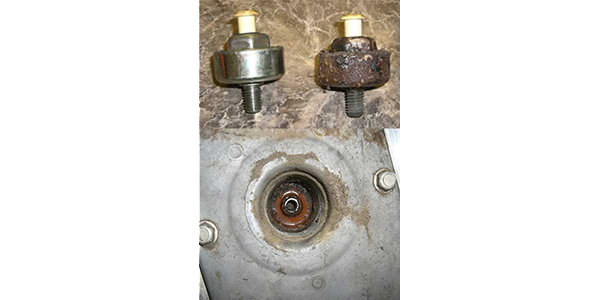
The defining feature of this code on GM V8 trucks is location. The knock sensors live in the lifter valley beneath the intake manifold, a low spot where moisture, dust, and even mouse nests accumulate. That environment corrodes the harness connectors, which is why GM truck owners so often replace the harness along with the sensors.
How to Diagnose P0332 (Step by Step)
- Scan and record all codes. Note whether P0327 (Bank 1) is also present, both failing together strongly suggests a shared harness problem.
- Inspect the harness access. On these trucks the knock sensor harness runs under the intake. A visual check often reveals green corrosion on the connectors once you can see them.
- Check the sensor resistance and signal. With a multimeter, a knock sensor typically reads a high, specific resistance to ground; an open or shorted reading points to a bad sensor. Compare to the service spec.
- Wiggle test the wiring. With live data showing knock sensor voltage, gently move the harness to see if the reading drops out, revealing a broken or corroded wire.
- Rule out rodent damage. Look for chewed insulation or nesting material in the valley.
- Confirm before replacing. Because the repair involves removing the intake, verify the sensor or harness is truly at fault rather than guessing.
The Fix: Knock Sensors and Harness
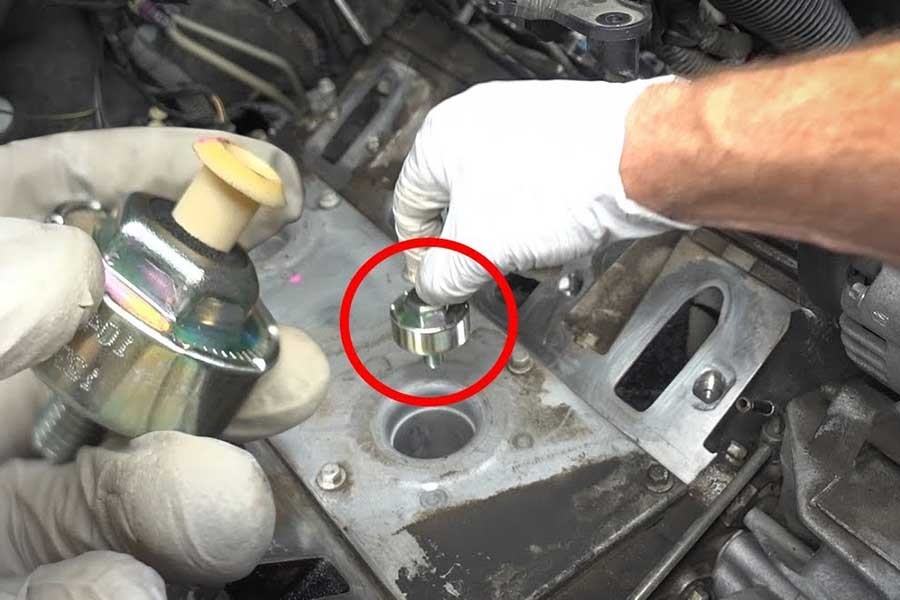
On a GM V8 truck, the practical fix is almost always to replace both knock sensors and the knock sensor harness at the same time, because they are buried under the intake manifold and you do not want to do this job twice.
The procedure in outline:
1. Remove the upper intake/plenum and intake manifold to access the valley.
2. Remove the old knock sensors and the corroded harness.
3. Clean the valley of any debris or nesting material.
4. Install new knock sensors (torque to spec) and a new harness with fresh connectors.
5. Reinstall the intake with new gaskets.
6. Clear the codes and confirm the fault does not return after a few drive cycles.
Using a quality harness (many owners prefer an upgraded, better-sealed harness) helps prevent a repeat. Because the intake has to come off, this is a moderate DIY job for an experienced home mechanic and a routine one for a shop.
Repair Cost
| Item | DIY Cost | Shop Cost (US avg) |
|---|---|---|
| Knock sensors (pair) | $30-90 | included below |
| Knock sensor harness | $30-80 | included below |
| Intake gaskets | $20-50 | included below |
| Complete job (parts + labor) | $80-220 (parts only) | $300-600 |
The parts are inexpensive; the cost is mostly the labor to remove and reinstall the intake manifold. Doing both sensors and the harness at once is the cost-effective choice since the labor is the same.
Frequently Asked Questions
Q: Can I drive my Silverado with a P0332 code?
A: Usually yes, for a while. P0332 mainly affects ignition timing, so you may notice reduced power, slightly worse fuel economy, or occasional pinging, but it is generally not an immediate breakdown risk. Still, fix it reasonably soon, because driving with retarded timing wastes fuel and the underlying harness corrosion only gets worse.
Q: Is P0332 usually the sensor or the wiring?
A: On GM V8 trucks it is very often the harness and connectors rather than the sensor itself, because the knock sensors sit in the intake valley where moisture and debris collect and corrode the wiring. That is why the common repair replaces both sensors and the harness together while the intake is already off.
Q: Why do P0327 and P0332 often appear together?
A: P0327 is knock sensor 1 (Bank 1) and P0332 is knock sensor 2 (Bank 2). When both set at once, it points to the shared knock sensor harness rather than two sensors failing simultaneously. The corroded harness in the valley affects both sensors, so replacing the harness usually clears both codes.
Q: Will P0332 cause my Silverado to fail emissions?
A: It can cause an emissions test failure simply because the check engine light is on, most test programs fail any vehicle with an active check engine light regardless of the specific code. Fixing the cause and clearing the code, then driving long enough for the readiness monitors to reset, is required before retesting.
Q: Do I really have to remove the intake manifold?
A: On these GM V8 trucks, yes, the knock sensors and harness are located in the valley beneath the intake manifold, so the intake must come off to reach them. That is why the labor, not the parts, is the main cost, and why it makes sense to replace both sensors and the harness in one job.
Sources & References
- General Motors service information for Vortec/Gen III-IV V8 knock sensor systems
- SAE J2012 OBD-II code definitions (P0332, P0327)
- RepairPal average repair cost estimates for knock sensor replacement
- Manufacturer torque and resistance specifications
Related articles on CarsDailyHub:
– OBD Codes and Diagnostics: Complete Guide
– How to Fix GM DTC P0332
– How to Use an OBD Scanner
– Chevy Colorado Transmission Problems