Will Disconnecting the Battery Reset a Crankshaft Sensor Issue?

By the CarsDailyHub Editorial Team | Automotive writers; every article fact-checked against OEM service documentation and OBD-II standards | Updated June 2026
Quick Answer: Disconnecting the battery will clear stored trouble codes, including crankshaft position sensor (CPS) codes, and reset the computer’s learned fuel and idle adaptations. But it does not fix a failed sensor, and it does not perform a crankshaft position variation relearn. So if the sensor or its wiring is actually faulty, the code comes right back, and if you needed a relearn (code P0315), a battery disconnect will not do it, you still need a scan tool.
This guide explains what a battery disconnect does and does not do for crankshaft position sensor problems and CPS-related codes. Last reviewed: June 2026.
Table of Contents
- What Disconnecting the Battery Actually Does
- What It Does NOT Do
- Will the CPS Code Come Back?
- Battery Disconnect vs Crankshaft Relearn
- How to Do It Properly (If You Try)
- When You Actually Need a Scan Tool
- Frequently Asked Questions
- Sources & References
What Disconnecting the Battery Actually Does
Pulling the negative battery cable for several minutes removes power from the engine computer’s volatile memory. When you do that, a few things happen:
- Stored diagnostic trouble codes are cleared, including crankshaft position sensor codes like P0335 or P0336.
- The check engine light turns off, at least until the computer re-detects a fault.
- Learned adaptations reset, the short- and long-term fuel trims and idle adaptations the computer built up over time return to their defaults.
- Other volatile settings reset, such as radio presets and the clock.
So a battery disconnect is essentially a blunt way to clear codes and reset adaptations, the same code-clearing a scan tool does, just less precise.
What It Does NOT Do
This is where people get the wrong idea. Disconnecting the battery does not:
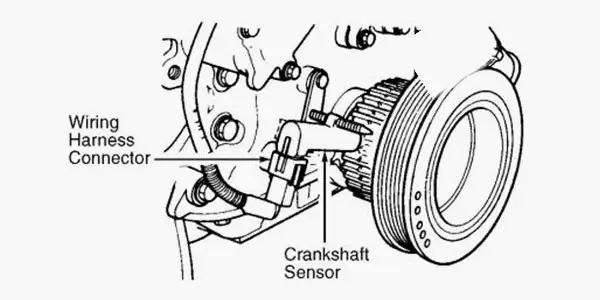
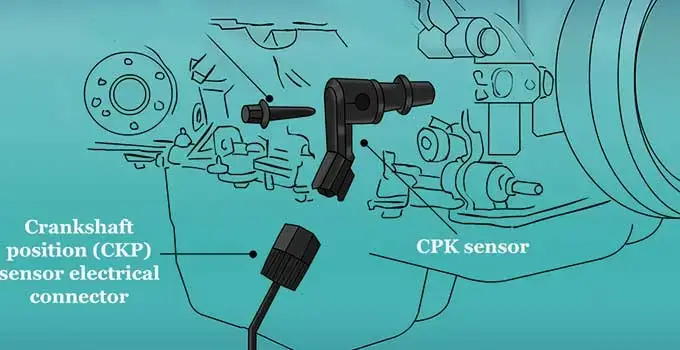
- Fix a failed crankshaft position sensor. If the sensor is bad or its wiring is broken, the hardware problem remains.
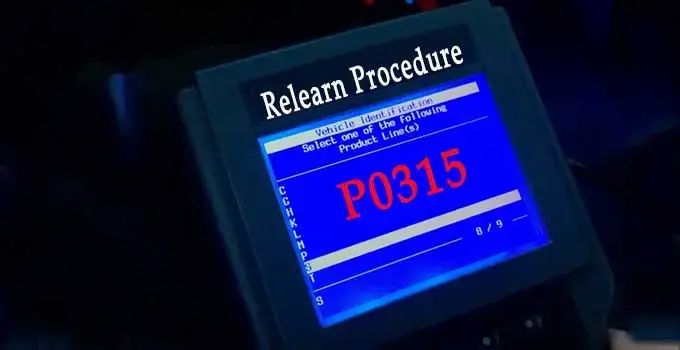
- Perform a crankshaft variation relearn. The relearn (needed for code P0315 on many GM vehicles) is a guided procedure done with a scan tool, a battery disconnect cannot accomplish it.
- Repair a damaged reluctor/tone wheel or a connector fault.
- Guarantee the light stays off. If the fault is still present, the computer re-detects it and the code and light return.
In other words, it clears the symptom (the stored code) but does nothing about the cause.
Will the CPS Code Come Back?
It depends entirely on whether there is a real fault:
- If the sensor genuinely failed, the code returns, usually within minutes to a few drive cycles, because the computer sees the same bad signal again.
- If the code was a one-time glitch (a momentary connector issue, a past low-voltage event), clearing it may be all you need and it may not return.
- If the code is P0315 (variation not learned), a battery disconnect will not help at all, the computer still needs the relearn performed, and the code stays until you do it.
So a battery disconnect is a useful test: clear the code, drive, and see if it comes back. If it does, you have a real fault to repair.
Battery Disconnect vs Crankshaft Relearn
These two are often confused, but they are completely different:
| Battery Disconnect | Crankshaft Relearn | |
|---|---|---|
| What it does | Clears codes, resets adaptations | Teaches the computer the crank tooth pattern |
| Tool needed | None (just a wrench) | A capable scan tool |
| Fixes P0315? | No | Yes |
| Fixes a bad sensor? | No | No |
| Restores misfire detection? | No | Yes (once relearned) |
If your situation calls for a relearn, no amount of battery disconnecting substitutes for it.
How to Do It Properly (If You Try)
If you want to use a battery disconnect to clear a CPS code and see whether it returns:
- Turn the engine and all electrics off.
- Disconnect the negative (black) battery terminal with the correct wrench (often 10mm).
- Wait at least 10 to 15 minutes so the volatile memory fully clears.
- Reconnect the terminal and tighten.
- Start the engine. Expect a slightly rough idle for the first several minutes while the computer relearns fuel and idle trims, this is normal.
- Drive normally and watch for the code or light to return.
Note that on modern vehicles, disconnecting the battery may require re-entering radio codes and can reset other learned settings, and a few systems prefer a memory-saver to retain settings.
When You Actually Need a Scan Tool
Reach for a scan tool instead of a battery disconnect when:
- The code is P0315 and a variation relearn is required.
- You want to read the code before clearing it to know what you are dealing with.
- You need live data to confirm whether the crankshaft sensor signal is actually present and stable.
- You want to clear codes without losing all the computer’s adaptations and your radio settings.
A scan tool is more precise, tells you what the fault is, and can perform the relearn a battery disconnect never can.
Frequently Asked Questions
Q: Will disconnecting the battery reset a crankshaft position sensor code?
A: It will clear the stored code and turn the check engine light off, the same as clearing codes with a scan tool. But it does not fix a failed sensor or wiring, so if there is a real fault the code returns within minutes to a few drive cycles. It also cannot perform a crankshaft variation relearn, so it will not resolve a P0315 code.
Q: Does disconnecting the battery do a crankshaft relearn?
A: No. A crankshaft variation relearn is a separate, guided procedure done with a scan tool that teaches the computer the crank’s tooth pattern for accurate misfire detection. Disconnecting the battery only clears codes and resets adaptations, it cannot perform the relearn. If you need a relearn (code P0315), you need a capable scan tool.
Q: My crankshaft sensor code came back after a battery disconnect. What does that mean?
A: It means there is a genuine fault, the sensor, its wiring, the connector, or the reluctor wheel, rather than a one-time glitch. The battery disconnect cleared the code, but the computer re-detected the same problem and set it again. The next step is to diagnose the sensor circuit and replace whatever is actually failing.
Q: How long should I leave the battery disconnected?
A: At least 10 to 15 minutes is a safe window to let the computer’s volatile memory clear fully. Some people touch the disconnected positive and negative cables together (with the battery out of the circuit) to drain residual capacitor charge faster, but simply waiting is fine. Expect a rough idle for a few minutes afterward as adaptations relearn.
Q: Is it bad to disconnect the battery to clear codes?
A: It is generally safe, but it is a blunt tool. You lose the stored codes (so you cannot read what was wrong), you reset fuel and idle adaptations, and you reset radio presets and the clock. Using a scan tool is better practice because it tells you the fault first and clears codes without wiping everything else.
Sources & References
- Manufacturer service information on clearing codes and computer adaptation resets
- General Motors crankshaft position variation relearn procedures
- SAE J2012 OBD-II code definitions (P0335, P0336, P0315)
- Scan tool documentation for code clearing and relearn functions
Related articles on CarsDailyHub:
– OBD Codes and Diagnostics: Complete Guide
– What Happens If You Do Not Relearn a Crankshaft Position Sensor?
– How to Reset a Crankshaft Position Sensor Without a Scanner
– What to Do After Replacing a Crankshaft Sensor