6.7 Cummins Throttle Position Sensor Problems: Symptoms and Fix

By the CarsDailyHub Editorial Team | Automotive writers; every article fact-checked against OEM service documentation and OBD-II standards | Updated June 2026
Quick Answer: On the 6.7 Cummins, the “throttle position sensor” is really the accelerator pedal position sensor (APPS), the electronic sensor in the gas pedal that tells the computer how far you are pressing. When it fails, the truck surges at steady throttle, hesitates, drops into limp mode, or develops a “dead pedal,” and it sets codes like P2127, P2128, P0220, or P0221. The usual fix is replacing the accelerator pedal assembly (which contains the sensor).
This guide covers the accelerator/throttle position sensor on the 6.7L Cummins (Ram 2500/3500, 2007.5 onward). Last reviewed: June 2026.
Table of Contents
- TPS vs APPS: What It Actually Is
- Symptoms of a Failing Sensor
- Codes It Commonly Sets
- Common Causes
- How to Diagnose It (Step by Step)
- The Fix
- Repair Cost
- Frequently Asked Questions
- Sources & References
TPS vs APPS: What It Actually Is
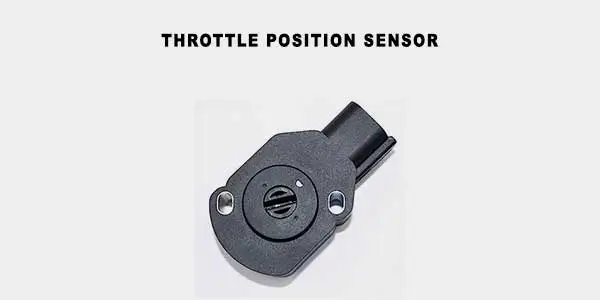
A diesel like the 6.7 Cummins has no throttle plate the way a gas engine does, so there is no traditional throttle position sensor on the intake. What people call the “throttle position sensor” on a Cummins is the Accelerator Pedal Position Sensor (APPS), the electronic sensor built into the gas pedal assembly. It reports how far you are pressing the pedal so the engine computer can command the right amount of fuel.
Because the APPS is the link between your foot and the fueling, a fault makes the truck behave erratically, and the computer, seeing implausible pedal signals, often defaults to a safe limp mode to protect you.
Symptoms of a Failing Sensor
- Surging at steady throttle, the truck speeds up and slows down slightly on its own while holding the pedal steady, a classic APPS symptom.
- Hesitation or stumble when accelerating.
- “Dead pedal,” where pressing the accelerator produces little or no response.
- Limp mode, reduced power and a capped RPM/speed.
- Erratic idle or stalling in some cases.
- Check engine light with pedal/throttle-related codes.
The surging-while-holding-steady-throttle behavior is the symptom owners most often describe, and it points squarely at the pedal sensor.
Codes It Commonly Sets
| Code | Meaning |
|---|---|
| P2127 | Accelerator pedal position sensor 2 circuit low |
| P2128 | Accelerator pedal position sensor 2 circuit high |
| P2122 | Accelerator pedal position sensor 1 circuit low |
| P2123 | Accelerator pedal position sensor 1 circuit high |
| P0220 | Throttle/pedal position sensor B circuit |
| P0221 | Throttle/pedal position sensor B range/performance |
The APPS uses more than one signal for redundancy, so codes often come in pairs referencing sensor 1 and sensor 2 circuits.
Common Causes
- Worn-out APPS inside the pedal assembly, the sensor element degrades with age and miles.
- Connector or wiring fault, corroded pins or a chafed harness at the pedal.
- Voltage supply issues, a poor ground or reference voltage problem upsetting the signal.
- On older 5.9 Cummins, a separate frame-mounted APPS module was a notorious failure point; the 6.7 integrates the sensor into the pedal, which is more reliable but still fails with age.
How to Diagnose It (Step by Step)
- Scan and record the codes. Pedal-position codes (P2122-P2128, P0220/P0221) point directly at the APPS circuit.
- Watch live data. View the APPS percentage while slowly pressing the pedal. The reading should rise smoothly from idle to full. Any jumpiness, dropouts, or a signal that does not track the pedal indicates a failing sensor.
- Wiggle test the connector at the pedal while watching live data for dropouts that reveal wiring or connector faults.
- Check the reference voltage and ground at the connector against spec to rule out a supply problem.
- Confirm before replacing. A smooth, accurate APPS trace means the sensor is fine and you should look elsewhere; an erratic trace confirms the pedal sensor.
The Fix
On the 6.7 Cummins the APPS is part of the accelerator pedal assembly, so the standard repair is to replace the pedal assembly. It is a bolt-in part under the dash by the pedals, generally a straightforward job:
- Disconnect the negative battery terminal.
- Unplug the pedal connector and unbolt the pedal assembly.
- Install the new assembly and reconnect.
- Reconnect the battery, clear the codes, and test that the live-data APPS reading now tracks the pedal smoothly.
If the sensor reads fine but the wiring or connector is at fault, repair the harness instead. Some trucks may benefit from an idle/APPS relearn after replacement, follow the model-specific procedure.
Repair Cost
| Item | DIY Cost | Shop Cost (US avg) |
|---|---|---|
| Accelerator pedal assembly (APPS) | $90-250 (part) | $200-450 |
| Wiring/connector repair | $20-80 | $120-300 |
| Diagnosis | – | $90-150 |
The pedal assembly is a moderate-cost part, and because it bolts in under the dash, many owners replace it themselves in under an hour.
Frequently Asked Questions
Q: Why does my 6.7 Cummins surge when I hold a steady throttle?
A: Surging while holding the pedal steady is the classic sign of a failing accelerator pedal position sensor (APPS). The sensor sends a slightly erratic signal, so the computer keeps adjusting fueling up and down, which you feel as surging. Watching the APPS reading on live data while holding the pedal usually confirms it by showing a jumpy signal.
Q: Is the 6.7 Cummins throttle position sensor the same as the accelerator pedal sensor?
A: Yes. A diesel has no throttle plate like a gas engine, so the “throttle position sensor” people refer to on a Cummins is actually the accelerator pedal position sensor (APPS) built into the gas pedal. It tells the computer how far you are pressing so it can command the correct fueling.
Q: Can a bad APPS put my Cummins in limp mode?
A: Yes. When the computer sees an implausible or out-of-range pedal signal, it often defaults to limp mode, reduced power and a capped speed, to keep the truck safe and predictable. Replacing the faulty pedal sensor and clearing the codes restores normal power once the signal is reliable again.
Q: How do I know if it’s the sensor or the wiring?
A: Use live data. Slowly press the pedal and watch the APPS percentage. If it rises smoothly and accurately, the sensor is good and you should inspect the wiring and connector, doing a wiggle test for dropouts. If the reading is jumpy or drops out on its own, the sensor in the pedal assembly is the problem.
Q: Can I keep driving with a failing APPS?
A: It is risky and unpleasant. Surging, hesitation, a dead pedal, or sudden limp mode can make the truck unpredictable, especially when merging or towing. Because the pedal assembly is an affordable, bolt-in part, it is worth replacing promptly rather than living with erratic throttle response.
Sources & References
- Cummins and Ram service information for the 6.7L Cummins accelerator pedal/APPS system
- SAE J2012 OBD-II code definitions (P2122-P2128, P0220, P0221)
- Manufacturer wiring and reference-voltage specifications
- RepairPal cost references for accelerator pedal sensor replacement
Related articles on CarsDailyHub:
– OBD Codes and Diagnostics: Complete Guide
– How to Use an OBD Scanner
– 6.7 Cummins Oil Capacity
– Why Your Car Goes Into Limp Mode