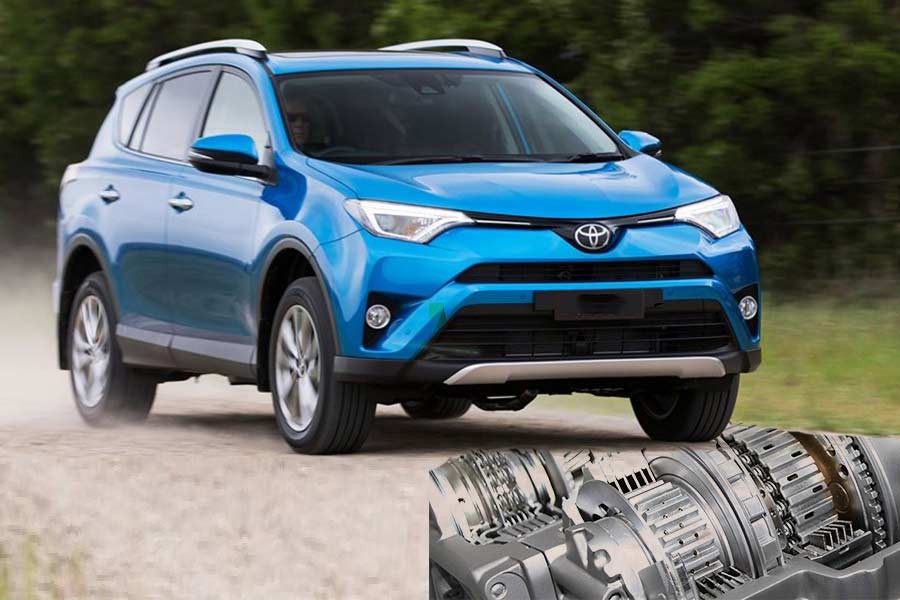

2020 Toyota RAV4 Transmission Problems: Causes and Fixes

By the CarsDailyHub Editorial Team | Automotive writers; every article fact-checked against OEM service documentation and owner-reported data | Updated June 2026
Quick Answer: The 2020 Toyota RAV4 (gas) uses an 8-speed automatic, and the most reported complaint is low-speed hesitation and a jerky or lurching feel in stop-and-go driving, especially when easing back onto the throttle. This is largely a shift-calibration characteristic, and Toyota addressed shift-quality concerns on these model years with transmission control software updates. The RAV4 Hybrid uses a completely different eCVT and does not share this behavior. True mechanical failure of the 8-speed is uncommon.
This guide covers the 2020 Toyota RAV4 with the 8-speed automatic, with notes on how the RAV4 Hybrid’s eCVT differs. Last reviewed: June 2026.
Table of Contents
- The 2020 RAV4 Transmission (8-Speed vs Hybrid eCVT)
- Common Problems and Symptoms
- What Causes the Hesitation and Lurch
- How These Problems Get Fixed
- The RAV4 Hybrid eCVT
- Maintenance and Prevention
- Frequently Asked Questions
- Sources & References
The 2020 RAV4 Transmission (8-Speed vs Hybrid eCVT)
The 2020 RAV4 comes in two very different drivetrains. The gas RAV4 uses an 8-speed automatic (a conventional geared automatic with a torque converter). The RAV4 Hybrid uses an eCVT, an electronic continuously variable system driven by the hybrid’s electric motors and planetary gearset, which behaves nothing like the 8-speed.
This distinction matters because almost all “2020 RAV4 transmission” complaints are about the gas model’s 8-speed and its low-speed shift behavior. The hybrid’s eCVT is a different design with its own characteristics.
Common Problems and Symptoms
| Symptom | What owners describe |
|---|---|
| Low-speed hesitation | A pause or lag accelerating from low speed or a stop |
| Jerky / lurching feel | A jolt when easing off and back onto the throttle in traffic |
| Harsh downshifts | A clunk when slowing or kicking down to pass |
| Delayed engagement | A brief pause before the car moves off |
| Gear hunting | Frequent shifting on gentle grades |
The defining 2020 RAV4 complaint is the low-speed hesitation-then-lurch in stop-and-go traffic.
What Causes the Hesitation and Lurch
- Shift calibration: The 8-speed’s programming favors efficiency and uses lock-up early, which can feel like hesitation followed by an abrupt lurch when it re-engages at low speed. This is the main driver of the complaint.
- Throttle mapping: Part of the perceived “transmission” hesitation is throttle response tuning, not the gearbox itself.
- Adaptive learning: The transmission adapts over time and after a reset may feel rougher until it relearns.
- Fluid condition: Less of a factor on a newer vehicle, but degraded fluid affects smoothness over time.
- Rarely, a fault: A stored transmission code or limp mode points to a genuine component issue rather than calibration.
How These Problems Get Fixed
- Check for software updates / TSBs. Toyota issued transmission control calibration updates addressing shift quality on these model years. A dealer can check what applies to your VIN, this is the primary fix for the hesitation/lurch.
- Allow relearn time after any update for the transmission to settle into smooth shift points.
- Adjust driving technique in the meantime, smoother, more deliberate throttle inputs reduce the low-speed lurch.
- Scan for codes if the behavior is accompanied by a warning light or limp mode, which indicates a real fault to diagnose.
- Fluid service as the vehicle ages, with the correct Toyota ATF.
Because this is largely calibration, the software update is the single most effective step.
The RAV4 Hybrid eCVT
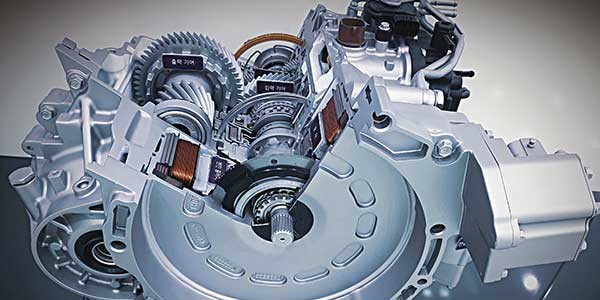
If you have the RAV4 Hybrid, your “transmission” is an eCVT, which uses electric motors and a planetary gearset rather than shifting gears. It does not hesitate or lurch the way the 8-speed can, and it has its own well-regarded reliability record. Hybrid drivers occasionally describe a different sensation, a disconnect between engine RPM and acceleration, which is normal eCVT behavior, not a fault. Genuine hybrid-system warnings (a red triangle or hybrid system message) are the signals to act on, not the normal eCVT feel.
Maintenance and Prevention
- Keep software current by raising any shift-quality concern at service so applicable updates are applied.
- Service the transmission fluid per Toyota’s guidance as the vehicle accumulates miles, using only the correct ATF.
- Drive smoothly in traffic to minimize the low-speed lurch.
- Address any code or limp-mode event promptly, as those indicate a real fault rather than calibration.
Frequently Asked Questions
Q: Why does my 2020 RAV4 hesitate and then lurch at low speed?
A: The 8-speed automatic uses early torque-converter lock-up and an efficiency-focused calibration, which can feel like a hesitation followed by an abrupt lurch when it re-engages in stop-and-go driving. It is mostly a calibration characteristic, and Toyota released transmission software updates addressing shift quality on these years. A dealer can apply the applicable update for your VIN.
Q: Is the 2020 RAV4 transmission defective?
A: For most owners, no, it is not a defect so much as a shift-calibration trait of the 8-speed automatic. Genuine mechanical failures are uncommon. The hesitation and lurch are addressed with software updates and improve with smoother throttle inputs. If your RAV4 stores a transmission code or enters limp mode, that is a separate, real fault to diagnose.
Q: Does the RAV4 Hybrid have the same transmission problem?
A: No. The RAV4 Hybrid uses an eCVT driven by electric motors and a planetary gearset, which is a completely different design from the gas model’s 8-speed automatic. It does not hesitate or lurch the same way. Any unusual sensation in the hybrid is usually normal eCVT behavior, and you should act on actual hybrid-system warning messages.
Q: Will a software update fix the 2020 RAV4 hesitation?
A: In most cases it helps significantly. Toyota issued transmission control calibration updates targeting shift quality on these model years, and applying the relevant update at a dealer is the primary fix for the low-speed hesitation and lurch. Allow the transmission a number of drive cycles afterward to relearn smooth shift points.
Q: Is it safe to drive my 2020 RAV4 with this hesitation?
A: Yes, the hesitation and lurch are about refinement, not a safety failure, so the vehicle is safe to drive while you arrange the software update. The cautions are if it slips, flares between gears, stores a code, or enters limp mode, which point to a genuine fault that should be diagnosed promptly.
Sources & References
- Toyota service information for the 8-speed automatic and RAV4 Hybrid eCVT
- Toyota technical service bulletins covering transmission shift-quality calibration on 2019-2020 models
- NHTSA complaint database for the Toyota RAV4 (nhtsa.gov)
- Owner-reported reliability and repair data
Related articles on CarsDailyHub:
– Transmission and Drivetrain: Complete Guide
– 2017 RAV4 Transmission Problems and Fixes
– Toyota RAV4 Check Engine, VSC, and 4WD Lights
– Should You Change Transmission Fluid After 100k Miles?