Honda CVT Transmission Problems: Causes, Symptoms, and Fixes

By the CarsDailyHub Editorial Team | Automotive writers; every article fact-checked against OEM service documentation and owner-reported data | Updated June 2026
Quick Answer: Honda’s CVT is generally one of the more reliable continuously variable transmissions, but the most reported problems are a low-speed judder or shudder (often felt when accelerating from a stop), slipping or hesitation, and occasional overheating. Many judder cases on models like the Civic and HR-V are addressed by a Honda software update combined with a fresh fill of the correct Honda CVT fluid (HCF-2). Using only genuine Honda CVT fluid and servicing it on time is the key to long CVT life.
This guide covers CVT problems across Honda models that use one (Civic, HR-V, Accord 4-cylinder, Fit, and others). Last reviewed: June 2026.
Table of Contents
- How the Honda CVT Works
- Common Honda CVT Problems and Symptoms
- The Judder Issue Explained
- What Causes Honda CVT Problems
- How Honda Fixes Them
- The Importance of HCF-2 Fluid
- Frequently Asked Questions
- Sources & References
How the Honda CVT Works
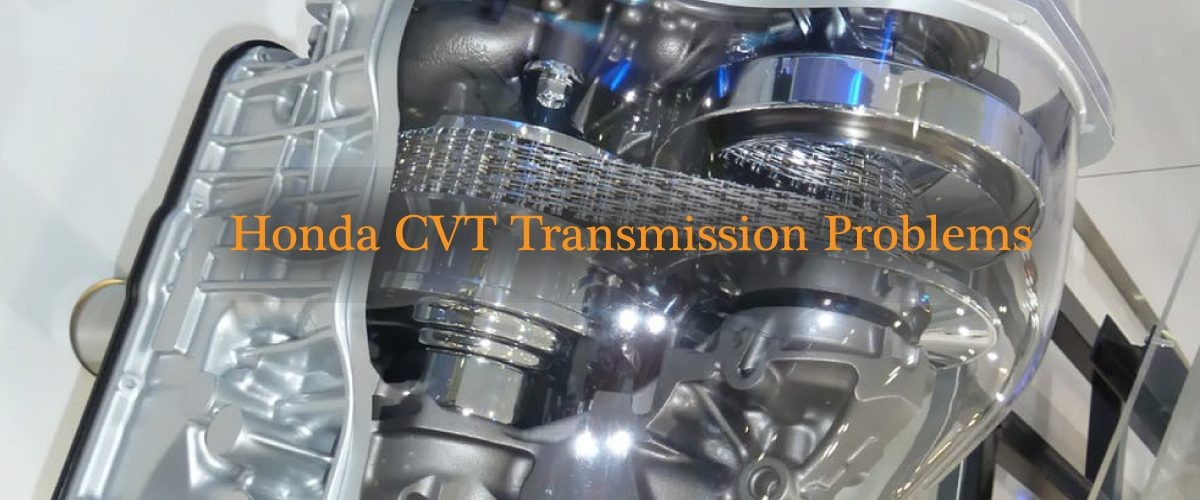
A Honda CVT uses a steel belt running between two variable-width pulleys to provide a seamless range of ratios instead of fixed gears. Honda’s design also uses a “start clutch” arrangement to get the car moving from a stop, rather than a traditional torque converter on some applications. The result is smooth, efficient acceleration, and on the whole Honda’s CVTs have earned a better reliability reputation than some rivals.
That said, the belt, pulleys, and start clutch all rely on the right fluid at the right condition, and most Honda CVT complaints trace back to fluid, software calibration, or the start-clutch engagement.
Common Honda CVT Problems and Symptoms
| Symptom | What owners describe |
|---|---|
| Low-speed judder / shudder | A shake or stutter when accelerating gently from a stop |
| Slipping or hesitation | A delay or a rev flare when you press the gas |
| Jerky engagement | A lurch when moving off or at low speed |
| Whining or droning noise | A rising drone with engine speed (some is normal) |
| Overheating | Reduced power or a warning under sustained load or heat |
| Delayed engagement | A pause before the car moves after selecting Drive |
The low-speed judder is by far the most discussed, especially on certain Civic and HR-V model years.
The Judder Issue Explained
The classic Honda CVT complaint is a judder or shudder felt at low speed, typically when accelerating gently away from a stop. It feels a bit like the car stuttering or the road surface being rough, even on smooth pavement. The sensation comes from the way the CVT’s start clutch and belt engage, and it is sensitive to fluid condition and control software.
Honda addressed this on affected models with a combination of a powertrain control software update and a fresh fill of the correct Honda CVT fluid, and in some cases extended warranty coverage on the affected component. If you feel a low-speed judder, that software-plus-fluid approach is the first thing to pursue at a dealer, not an assumption that the whole transmission has failed.
What Causes Honda CVT Problems
- Start-clutch engagement and software calibration: The main driver of the low-speed judder; addressed via reprogramming.
- Fluid condition or wrong fluid: Degraded fluid, or anything other than genuine Honda CVT fluid, causes judder, slipping, and accelerated wear.
- Heat: Sustained heavy load or hot climates raise fluid temperature and stress the belt and clutch.
- Belt and pulley wear: Over high mileage, wear leads to slipping and noise.
- Deferred maintenance: Skipping fluid service shortens CVT life significantly.
How Honda Fixes Them
- Diagnose and check for service bulletins. Many judder complaints have a specific Honda fix, your dealer can check for applicable software updates and campaigns by VIN.
- Apply the software update. Reprogramming the powertrain control software is often the core of the judder fix.
- Replace the CVT fluid with genuine HCF-2. A fresh, correct fluid fill is paired with the software update to resolve judder and refresh shift quality.
- Check warranty coverage. Some affected components had extended coverage; confirm with your VIN before paying.
- Inspect for wear if symptoms persist after software and fluid, which can indicate belt, pulley, or start-clutch wear needing more involved repair.
The software-plus-fluid combination resolves a large share of cases without major repair, which is why diagnosis at a Honda dealer is worthwhile.
The Importance of HCF-2 Fluid
Honda CVTs require Honda CVT Fluid (HCF-2), and this is not a place to economize. The fluid is engineered for the specific friction and clamping characteristics of Honda’s CVT, and using a generic or incorrect fluid can quickly cause judder, slipping, and permanent damage. Likewise, the older HCF-1 is not interchangeable with HCF-2.
Service the fluid on schedule (and sooner under hard use or heat), always with genuine HCF-2, and you remove the single most common cause of premature CVT trouble. If a shop offers a “universal CVT fluid,” decline it for a Honda.
Frequently Asked Questions
Q: Why does my Honda Civic judder at low speed?
A: A low-speed judder when accelerating gently from a stop is the classic Honda CVT complaint, and it relates to the start-clutch engagement and the control software. Honda addressed it on affected models with a powertrain software update plus a fresh fill of genuine Honda CVT fluid (HCF-2). Have a dealer check your VIN for the applicable update before assuming the transmission has failed.
Q: Are Honda CVT transmissions reliable?
A: On the whole, Honda’s CVTs are considered among the more reliable of the type, especially when maintained with the correct fluid. The most common complaint is a low-speed judder on certain model years, which usually has a specific software-and-fluid fix. The biggest factor in long-term reliability is servicing the fluid on time with genuine HCF-2.
Q: What fluid does a Honda CVT use?
A: Honda CVTs require genuine Honda CVT Fluid, HCF-2 on current models. It is engineered for the specific friction and clamping needs of Honda’s CVT, and using a generic or incorrect fluid, or the older HCF-1 where HCF-2 is specified, can cause judder, slipping, and lasting damage. Always insist on the correct genuine fluid.
Q: Can a fluid change fix Honda CVT judder?
A: Often it is part of the fix, but not always by itself. For the known low-speed judder, Honda pairs a fresh genuine HCF-2 fill with a powertrain software update, and the combination resolves many cases. A fluid change alone may help, but checking for and applying the software update at a dealer gives the best result.
Q: How often should I change Honda CVT fluid?
A: Follow the maintenance minder and severe-service guidance for your model, and service sooner if you drive in heavy traffic, tow within limits, or live in a hot climate, because heat shortens fluid life. Regular fluid service with genuine HCF-2 is the most effective way to prevent judder and slipping over the life of the car.
Q: Is it safe to keep driving with CVT judder?
A: A mild low-speed judder is usually not an immediate safety risk, but it is a signal not to ignore, because continued operation with degraded fluid or an unresolved calibration can lead to more wear. Get it diagnosed promptly so the software-and-fluid fix can be applied before it progresses to something more expensive.
Sources & References
- Honda service information and CVT fluid (HCF-2) specifications
- Honda technical service bulletins covering CVT judder software updates (VIN-specific)
- NHTSA complaint database for Honda models (nhtsa.gov)
- Owner-reported reliability and repair data
Related articles on CarsDailyHub:
– Transmission and Drivetrain: Complete Guide
– Nissan Altima CVT Transmission Problems
– Nissan Rogue CVT Transmission Problems
– Should You Change Transmission Fluid After 100k Miles?